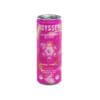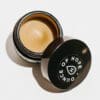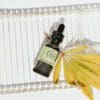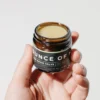








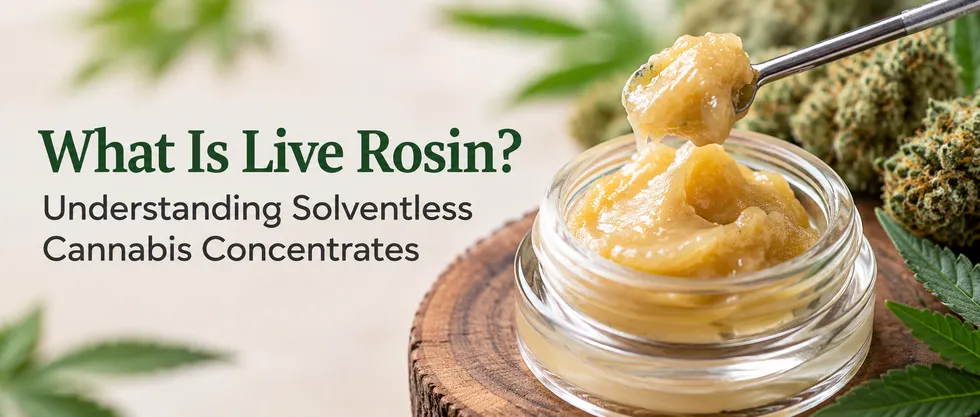
Live rosin is a solventless cannabis concentrate made by pressing hash from fresh-frozen cannabis. Instead of drying the plants after harvest, growers freeze them right away to hold on to aroma compounds that tend to fade with drying. The resin is then squeezed out of the hash using nothing but heat and pressure, with no butane, propane, or other chemical solvents involved.
If the name has you a little confused, you're in good company. "Live rosin" and "live resin" are one letter apart but made in completely different ways. Throw in plain rosin and hash rosin, and the shelf labels start to blur together.
We'll untangle all of it here: what each word in the name actually means, how live rosin goes from plant to jar, how it stacks up against similar products, why the price tag runs high, and what to know before you try it.
What Is Live Rosin, in Simple Terms?
Think of the name as two clues. "Live" tells you about the plant before it was processed. "Rosin" tells you how the oil was pulled out of it. Put them together and you get resin pressed from hash that started as freshly frozen cannabis.
What Does "Live" Mean in Live Rosin?
"Live" means the plant was frozen soon after harvest rather than dried and cured. You'll often see this starting material called fresh-frozen cannabis.
Most flower you've seen in a jar was hung to dry first, then cured for days or weeks. That's what makes it easy to store and smoke. The trade-off is that drying can wear down some of the plant's lighter aroma compounds, known as terpenes. Terpenes are the reason one strain smells like citrus and another smells like pine.
Freezing hits the pause button. The idea is to lock in the plant's scent closer to how it smelled on the day it was cut.
There's a practical reason, too. Once frozen, the plant's tiny resin glands (called trichomes) get hard and brittle, which makes them easier to separate later in ice water.
Worth saying plainly: freezing helps preserve flavor and aroma. It doesn't, on its own, make a product stronger or safer.
What Does "Rosin" Mean?
Rosin is a concentrate made by pressing cannabis, or hash made from it, between warm plates. The gentle heat softens the resin and the pressure squeezes it out as a thick, sticky oil.
Because no chemical extraction solvents touch it at any point, rosin is described as solventless.
That word describes the method, though, not the end result. "Solventless" isn't a promise that a product is "chemical-free" or "safer." How the plants were grown, handled, and tested still matters, which is why lab results are worth checking on any concentrate.
How Is Live Rosin Made?
At a high level, live rosin takes four stages: freeze, wash, dry, and press. Each one is slow on purpose. (Quick note: this is a plain-English overview of the process, not instructions for doing it at home.)
Freezing the Cannabis
It starts at harvest. Instead of heading to a drying room, the plants go into the freezer soon after they're cut, and they stay frozen until it's time to wash them. Keeping the cold chain unbroken protects the trichomes and the terpenes inside them.
Making Ice-Water Hash
Next comes the wash. The frozen plants are gently stirred in ice-cold water, and the cold makes the trichome heads snap off. That water is then run through a stack of mesh bags, each one catching trichomes of a different size.
The gritty, sandy material left in the bags is ice-water hash, also called bubble hash. Makers usually sort it by micron size, since some sizes melt more cleanly than others. The top grades often get labeled "full melt."
Drying the Hash
Fresh hash is wet, so it has to dry before anyone can press it. Many makers turn to freeze-drying, which pulls out moisture at low temperatures. That helps protect the aroma and lowers the risk of mold.
Pressing the Hash
Last, the dried hash goes into a fine filter bag and gets pressed between warm plates. The resin seeps out as oil while the filter holds back any leftover plant bits. What's collected is live rosin.
Some producers package it right then. Others let it sit somewhere cool so the texture can change, which we'll get to in a moment. If you're curious why some growers choose pressing over solvents in the first place, Ounce of Hope explains its reasons in why it uses a rosin press.
Live Rosin vs. Live Resin vs. Rosin vs. Hash Rosin
Here's a shortcut that clears up most of the confusion: "live" points to fresh-frozen plants, "rosin" means pressed without solvents, and "resin" on a concentrate label usually means a solvent was used.
|
Product |
Starting Material |
Solventless? |
Basic Difference |
|
Live rosin |
Ice-water hash made from fresh-frozen cannabis |
Yes |
Hash rosin made specifically from fresh-frozen plants |
|
Live resin |
Fresh-frozen cannabis |
No |
Fresh-frozen plants extracted with a solvent, often butane or propane |
|
Rosin |
Usually dried and cured flower, sometimes hash or kief |
Yes |
Pressed with heat and pressure; the label alone may not say what was pressed |
|
Hash rosin |
Hash, such as bubble hash or dry sift, from fresh-frozen or cured plants |
Yes |
Pressed from hash instead of whole flower |
Live Rosin vs. Live Resin
These two share a starting point. Both begin with fresh-frozen cannabis, which is how they both earn the "live" label. Where they split is extraction. Live resin uses a solvent to strip resin from the plant, and the solvent is purged afterward. Live rosin never meets a solvent; it's washed into hash and then pressed.
Rosin vs. Live Rosin
Every live rosin is a rosin, but plenty of rosin isn't live. Regular rosin is often pressed straight from dried, cured buds. Live rosin adds two extra conditions: the plants were frozen fresh, and they were turned into hash before pressing.
Hash Rosin vs. Live Rosin
Hash rosin simply means rosin pressed from hash. When that hash came from fresh-frozen plants, you've got live rosin, which is why some products say live hash rosin on the label. When it came from dried plants, it's still hash rosin, just not the "live" kind.
So Which One Is Better?
Honestly, it depends on who's asking. Some people love live rosin for its solventless process and bright aroma. Others lean toward live resin or regular rosin because of price, texture, or what's on the shelf near them. In most cases, the cannabinoid and terpene profile of the actual product, plus how you plan to use it, tells you more than the category name does.
What Does Live Rosin Look, Smell, and Feel Like?
Open a jar of live rosin and you'll usually find something sticky and golden with a smell that fills the room. That said, no two batches look exactly alike.
Texture. Freshly pressed rosin is soft and oily. Many makers then give it a rest at cool temperatures, and during that time it can firm up into a few familiar styles:
- Rosin badder: whipped and creamy, a bit like frosting.
- Rosin jam: glossy and spreadable, often slightly grainy.
- Rosin sauce: a runny, terpene-heavy liquid with crystal-like solids mixed in.
Fresh press vs. cold cure. These two terms just describe what happened after pressing. A fresh press is sold soon after it comes off the press, typically still smooth and oily. A cold cure was stored cold for a while first, which often turns it into a badder or jam. It's the same kind of product either way. Cold curing mostly changes how it looks and handles, and every maker has their own method.
Color. You might see anything from pale cream to deep amber. Strain, plant maturity, hash grade, and storage all nudge the color one way or another. Judging quality by color alone usually leads you astray.
Aroma and terpenes. For a lot of people, the smell is the first thing they notice. Because the plant was frozen fresh, the scent can seem livelier, closer to the growing plant than to cured buds. Even so, it changes from strain to strain and batch to batch. If the product lists terpene test results, those will tell you more than your nose can.
Why Can Live Rosin Feel Different From Person to Person?
There's no single "live rosin experience." What you feel comes down to two things: what's in the product, and who's using it.
Product Factors
Start with the cannabinoids. Some live rosin is mostly THCa, while other products bring in CBD, CBG, or a mix. (If THCa is new to you, our guide on whether THCa gets you high explains what heat does to it.) THC concentration matters too, since concentrates can carry far more per gram than flower, and two jars can still be miles apart.
Terpenes shape flavor and smell. Scientists are still working out how much they shape effects. Beyond that, the strain, the growing conditions, and harvest timing all change what ends up in the hash.
The format makes a difference as well. A dab, a vape pod, and a rosin-infused oil can start from the same rosin and still deliver very different amounts. And inhaling cannabis runs on a different clock than eating it, which we'll cover below.
Personal Factors
Then there's you. Tolerance is a big one: someone who uses cannabis every day often feels less from the same amount than an occasional user. Metabolism, body weight, and other individual differences play a part. With strong concentrates, even a small change in how much you use can be noticeable.
Your history counts, too. If you're used to flower, a concentrate may feel much more intense than you expect. Even your setting and mood can color the experience.
Put all of that together and it makes sense that two people can try the same product and describe it in totally different ways.
Why Does Live Rosin Cost More?
Short answer: it takes a lot of plant, a lot of time, and a lot of gear to make a little bit of live rosin. The price has more to do with the process than with a fancy label.
It begins with the plants themselves. They have to be frozen the moment they're harvested and kept that way, which means freezer space and tight timing. Fresh-frozen plants also still carry their water weight, and only part of their trichomes become hash good enough to press. So a big pile of plant material ends up as a fairly small jar.
Then there's the labor. Washing, sorting, drying, pressing, and often curing each take careful, skilled work. The equipment isn't cheap either: wash vessels, filter bags, freeze dryers, and presses all add up. Many producers also keep the finished rosin cold through storage and shipping, and testing every batch adds one more cost.
Prices still swing by brand, region, and grade. Just keep in mind that a higher price doesn't automatically mean a better fit for you. The lab results are a better guide than the price tag.
How Should Live Rosin Be Stored, and Does It Expire?
Treat live rosin a bit like a good cheese: keep it cool, keep it covered, and keep it out of the sun. It can slowly change in texture, color, and smell over time, especially when it gets warm. There's no one shelf life that applies to every product, so go by the storage directions and any date printed on the package.
Heat is the main enemy. Terpenes are fragile, and warmth can make them fade faster. It can also turn a smooth badder runny, or a glossy rosin grainy. That's why many makers suggest the fridge, and some recommend the freezer for longer storage. When in doubt, follow the label.
Light, air, and moisture can speed up those changes, too. Close the lid tightly, store the container somewhere dark, and try not to leave a cold jar open in a warm, humid room for long, since condensation can form inside.
How do you know something's off? Watch for a smell that's gotten much weaker or just seems wrong, a color that's darkened noticeably since you bought it, or a texture that's turned runny or sugary. Any sign of mold or moisture is a clear stop sign. Some of these shifts mostly affect flavor, but if a product looks or smells wrong, it's safer to skip it. Wondering about other products? Our post on whether THC gummies expire covers similar ground.
Ways People Use Live Rosin
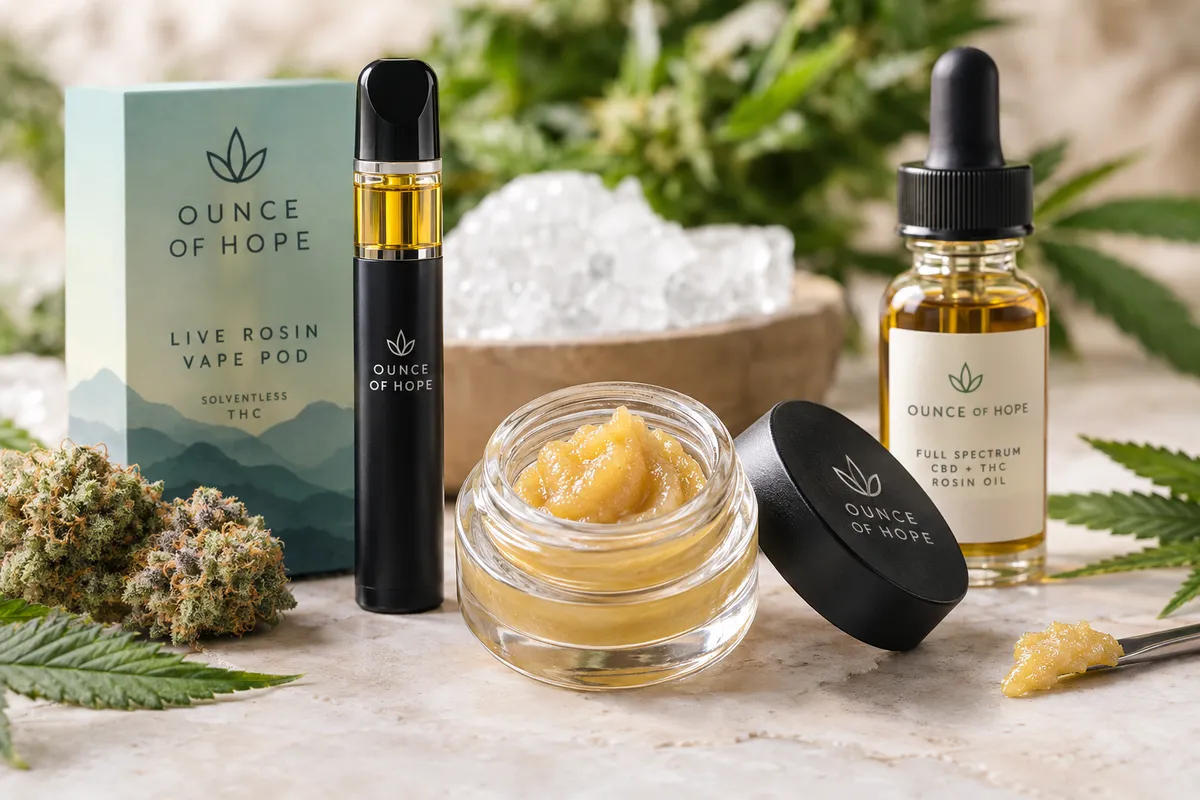
Most people use live rosin in one of four ways: dabbing it, vaping it, taking it in an oil, or eating it in an infused product. The real dividing line is whether it's inhaled or swallowed.
Dabbing is the most direct route. A tiny amount of rosin is heated on a hot surface and the vapor is inhaled. It's fast and can be very intense, so it's usually the choice of experienced concentrate users.
Vaping puts rosin into a pod or cartridge, like Ounce of Hope's live hash rosin vape pods. A lot of people find this simpler than handling a sticky jar. Our explainer on how smokeless THC and CBD vapes work goes deeper.
Rosin oils blend rosin into a carrier oil you take by dropper, such as a full-spectrum CBD + THC rosin oil. The label tells you how much is in each serving, which makes amounts easier to track.
Edibles and drinks can be made with rosin or other cannabis extracts. Many come in measured portions, like Delta-9 gummies or Delta-9 THC seltzers, with a set amount per piece or can. Check the label to see which kind of extract a product uses.
Inhaled vs. Edible Cannabis
Inhaled cannabis tends to kick in fairly fast, often within minutes. Edibles take the long way around. According to the CDC, they can take 30 minutes to 2 hours to take effect, and the effects can stick around longer than people expect.
That waiting period trips a lot of people up. They don't feel anything, so they take more, and then it all arrives at once. If you go the edible route, be patient before deciding on a second serving. Our guide on how long edibles take to hit walks through the timing.
Live Rosin for Newer or Lower-Tolerance Users
If you're new to cannabis, a straight concentrate probably isn't the best place to begin. Pure live rosin packs a lot of cannabinoids into a very small amount, so it's easy to overshoot without meaning to.
Measured formats give you more control while you learn how your body responds. Oils, gummies, and drinks usually list how much THC or CBD is in each serving, which is a lot easier to keep track of than a dab or a vape puff. You can see measured options in Ounce of Hope's edibles and beverages.
Even with a clearly labeled product, cannabis affects everyone a little differently. A few habits go a long way, whatever form you pick:
- Start low and go slow. Try a small amount, then give it time.
- Follow the product label. Serving sizes and directions are there for a reason.
- Understand the cannabinoid concentration. Know how much THC, THCa, or CBD is in each serving and in the whole package.
- Avoid combining cannabis with alcohol. The CDC notes that mixing substances can increase impairment.
- Never drive after using cannabis. Line up a ride or stay where you are.
Common Misconceptions About Live Rosin
"Solventless means safer for everyone."
Not quite. "Solventless" tells you no chemical solvents were used, and that's a real difference in how it's made. But safety also hinges on how the plants were grown, how clean the process was, how potent the product is, and who's using it. A lab report says more about a specific jar than any single word on the label.
"Live rosin is always stronger."
Potency belongs to the product, not the category. Live rosin can be very strong, but so can live resin and plenty of other concentrates. Concentrates in general hold more cannabinoids by weight than flower, though the exact numbers shift from batch to batch. Check the lab results for the real figures.
"Darker rosin is bad."
Color alone won't tell you much. Strain, harvest timing, hash grade, and storage can all change it. Yes, darker rosin might have aged or seen some heat, but it might also just come from a different plant. Look at the whole picture: aroma, texture, freshness, and testing.
"Live rosin and live resin are the same."
They sound alike, but they aren't. Both start with fresh-frozen cannabis. Live resin is extracted with a solvent; live rosin comes from ice-water hash pressed with heat and pressure.
"Live rosin always produces the same experience."
It doesn't, and it can't. Cannabinoid levels, terpenes, how it's used, and personal factors like tolerance all shape the result. The same jar can feel different to two people, or even to one person on two different days.
Safety and Practical Considerations
Live rosin is potent stuff, and a little common sense keeps the experience a good one. Most of these tips apply to any cannabis concentrate. They're general pointers, not medical advice.
- Respect the potency. The CDC notes that highly concentrated THC products have been linked with more severe cannabis use disorder symptoms.
- Start low and go slow. A small amount and a little patience beat guessing every time.
- Read the label and the COA. A Certificate of Analysis is a lab report showing cannabinoid levels and, often, screens for contaminants. Ounce of Hope publishes its lab results so you can look before you buy.
- Think about inhalation. Breathing in any product comes with some risk. The CDC says smoked cannabis can harm lung tissue, and the research on dabbing and vaping is still catching up.
- Lock it up. Store cannabis in a locked, childproof container that kids and pets can't see or reach. Children who swallow THC products can get very sick. If it happens, call Poison Control at 1-800-222-1222, or 911 in an emergency.
- Skip the driving. Cannabis can slow your reactions and throw off coordination, so don't drive or run machinery after using it.
- Avoid it during pregnancy and breastfeeding. THC exposure during pregnancy may affect a child's development.
- Plan ahead for drug tests. THCa and other THC products can trigger a positive result. Our post on whether THCa shows up on a drug test has the details.
- Ask about your medications. Cannabis may interact with some medicines, so check with a healthcare professional if you take prescriptions or have a health condition.
- Stay current on the law. Rules differ by state and are shifting at the federal level. Congress has redefined hemp using a "total THC" standard that counts THCa. That change was scheduled for November 12, 2026, and was later delayed to December 11, 2026 for naturally derived cannabinoids. Check the current federal and state rules where you live. All products are for adults 21 and older.
Is Live Rosin Right for You?
So, back to the big question: what is live rosin? It's a solventless concentrate pressed from ice-water hash, and that hash comes from plants frozen fresh at harvest. The "live" part refers to that freezing. The "rosin" part refers to the heat-and-pressure method, which is also what separates it from live resin and its solvents.
Whether it suits you really depends on what you're after. If you love bold flavor and like the idea of a solventless process, it may be worth a look. If you're still getting to know cannabis, a measured product might be a more comfortable place to start. Either way, the specific product and your own body will shape how it feels.
If you'd like to keep reading or compare options, take a look at Ounce of Hope's rosin products and other concentrates, learn more about THCa and hemp-derived Delta-9, or check out gentler formats in edibles, beverages, andTHC flower. Whatever you land on, the lab results are a good first stop.
Frequently Asked Questions
Is live rosin the same as live resin?
No. Both start with fresh-frozen cannabis, but live resin is extracted with a solvent such as butane or propane. Live rosin is made by pressing ice-water hash with heat and pressure, with no solvents.
Is live rosin solventless?
Yes. Live rosin is made with ice water, heat, and pressure only. No chemical extraction solvents are used at any stage.
What is the difference between rosin and live rosin?
Regular rosin is often pressed from dried and cured flower. Live rosin is pressed from hash made from fresh-frozen plants, which helps preserve aroma and flavor.
Is live rosin stronger than flower?
Concentrates like live rosin usually contain more cannabinoids by weight than flower. Exact potency varies by product, so check the label and lab results.
Why is live rosin so expensive?
It takes a lot of fresh-frozen plant material, several labor-heavy steps, special equipment, and cold storage to make a small amount of live rosin.