


You've probably heard someone call a vape pen "smokeless" and wondered what that really means. Maybe you're curious about THC or CBD but don't like the idea of lighting up. Or maybe you've smoked THCa flower for years and want to know if a vape feels different.
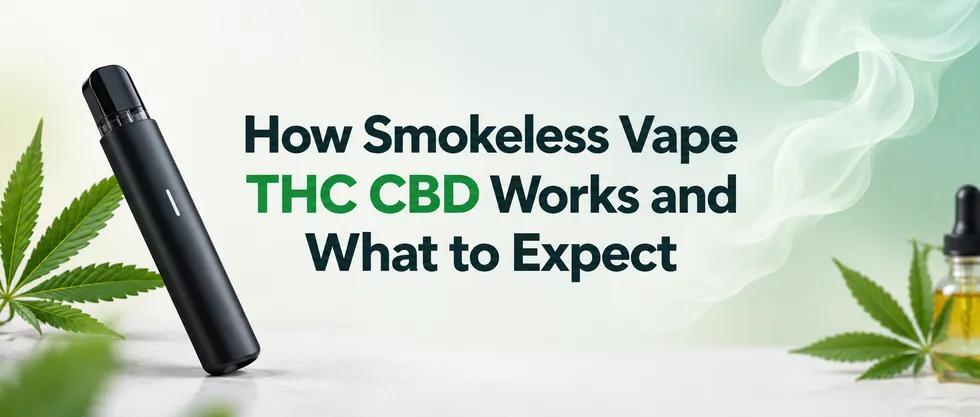
Here's the short answer. A smokeless vape THC CBD device heats cannabis oil until it turns into vapor, without setting it on fire. You breathe in that vapor, the cannabinoids pass into your blood through your lungs, and many people notice effects within minutes.
That's the simple version. The details matter more than most guides admit, because how a vape feels depends on what's in it, how you use it, and who you are. This guide covers all of it, including safety, drug tests, and a federal law change coming later in 2026.
What "Smokeless" Really Means (and What It Doesn't)
Smoke comes from burning. When you light a joint, the plant combusts, and that fire creates ash, tar, and other byproducts along with the cannabinoids.
A vape works differently. It heats oil just enough to turn cannabinoids and terpenes into vapor, without burning anything. There's no flame, no ash, and usually far less lingering smell.
Still, "smokeless" doesn't mean "harmless." What comes out of a vape is an aerosol, made of tiny droplets that can carry whatever else is in the oil or released by the hardware. Your lungs are still doing the work. That's why ingredients and quality matter so much.
If you'd rather not inhale at all, edibles and oils are other smoke-free options. They work more slowly and last longer, which suits some people better.
How a THC or CBD Vape Pen Works
Inside a Disposable Vape Pen
Most disposable vape pens have four main parts: a small battery, a heating element (often a coil or ceramic core), a sealed chamber that holds the oil, and a mouthpiece. Many are draw-activated, so inhaling switches on the heater. Others use a button. Either way, the pen warms a small amount of oil, you pull in the vapor, and it cools back down.
Disposable vs. Cartridge Devices
A disposable comes pre-filled and ready to go. When the oil or battery runs out, the whole device is done. Cartridge systems pair a rechargeable battery with swappable carts. Disposables win on convenience, while cartridges can mean less waste over time.
What's Actually in the Oil
This is where products differ most. Distillate is a refined extract that's mostly one cannabinoid, often with terpenes added back for flavor. Live resin and rosin aim to keep more of the plant's natural compounds, and rosin is made with heat and pressure instead of chemical solvents. What you don't want is a mystery thickener, which leads straight to the safety section below.
What Happens in Your Body After You Inhale
Your lungs have a huge surface area lined with tiny blood vessels. When you inhale vapor, THC or CBD moves into your bloodstream quickly and reaches your brain soon after.
Your body has its own signaling network called the endocannabinoid system. It helps regulate things like mood, sleep, appetite, and pain. THC binds to a receptor in this system called CB1, which is found throughout the brain. That's the main reason THC causes a high. CBD works differently and doesn't cause a high, though scientists are still learning exactly how it acts in the body.
This lung route is the big difference from edibles. Swallowed cannabis passes through your gut and liver first, so it takes longer to kick in and usually lasts longer. Our guide on how long edibles take to hit compares the two.
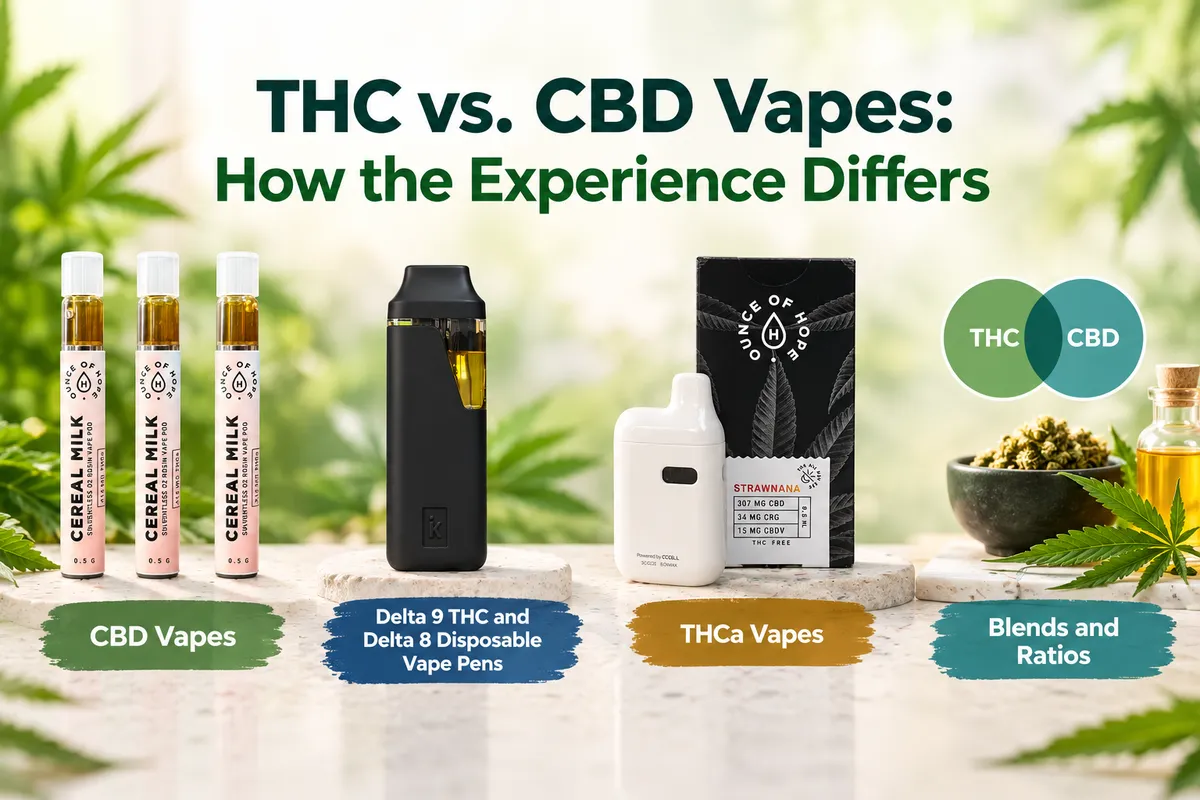
THC vs. CBD Vapes: How the Experience Differs
CBD Vapes
CBD vapes are generally non-intoxicating. Many people describe the feeling as subtle. One catch: full-spectrum CBD can contain small amounts of THC, which can matter for drug tests even if you never feel high.
Delta 9 THC and Delta 8 Disposable Vape Pens
Delta 9 THC is the main intoxicating compound in cannabis. Delta 8 is a close chemical cousin that many users describe as milder, though research comparing the two in people is still limited. A Delta 8 disposable vape pen is usually made from hemp CBD that has been chemically converted, which is one more reason lab testing matters.
THCa Vapes
THCa is the raw form of THC found in the living plant. On its own, it doesn't produce the usual high. Heat changes that. When THCa is warmed, it converts into Delta 9 THC through a process called decarboxylation. So a THCa vape, like smoking THCa flower, can feel much like regular THC. Our article Does THCa Get You High? explains this in more detail.
Blends and Ratios
Some blends combine THC and CBD. People often choose them hoping for a gentler experience, but how a ratio feels varies a lot from person to person.
What to Expect: Onset, Peak, and How Long It Lasts
With inhaled THC, many people notice effects within a few minutes, often within about 10. Effects build for a short while, then slowly fade. Research on inhaled cannabis commonly describes effects lasting around two to four hours, though some people find they wear off sooner.
Think of these as typical ranges, not promises. A light puff of a CBD vape may feel like very little. A long draw from a strong THC pen can feel intense, fast.
New THC users sometimes report dry mouth, red eyes, a faster heartbeat, lightheadedness, or anxiety, especially at higher amounts. Because inhaled effects show up quickly, you can usually tell within minutes whether you've had enough.
What to Expect: Onset, Peak, and How Long It Lasts
With inhaled THC, many people notice effects within a few minutes, often within about 10. Effects build for a short while, then slowly fade. Research on inhaled cannabis commonly describes effects lasting around two to four hours, though some people find they wear off sooner.
Think of these as typical ranges, not promises. A light puff of a CBD vape may feel like very little. A long draw from a strong THC pen can feel intense, fast.
New THC users sometimes report dry mouth, red eyes, a faster heartbeat, lightheadedness, or anxiety, especially at higher amounts. Because inhaled effects show up quickly, you can usually tell within minutes whether you've had enough.
Vaping vs. Smoking THCa Flower
Plenty of people come to vapes from smoking THCa. Both use heat to turn THCa into active THC, so the effects feel related. The differences are in the delivery.
Smoking THCa flower burns the whole plant. You get the full aroma and ritual, along with the byproducts of combustion. Vaping an extract skips the flame and packs more cannabinoid into each puff. That concentration deserves respect. If you're used to flower, one draw from a THCa vape may hit harder than you expect.
Neither choice is risk-free. If keeping your lungs out of it is the goal, non-inhaled THCa products or edibles are worth a look.
Common Misconceptions
"Smokeless means harmless" is the most common myth. Less smoke is not the same as no risk, and what's in the oil matters a great deal.
Many people also believe CBD vapes can't show up on a drug test. Most tests look for THC metabolites, not CBD. Yet trace THC in full-spectrum products can add up with regular use.
Some assume THCa isn't "real" THC. Once heated, it becomes Delta 9 THC, so both the effects and the test results can be similar.
And bigger clouds don't mean a stronger dose. Cloud size depends mostly on the device and other ingredients. Potency comes from cannabinoid content, which you'll find on the lab report.
Safety and Practical Considerations
The EVALI Lesson
In 2019, a wave of serious lung injuries in the U.S. was tied to vaping. Health officials named it EVALI. The CDC found vitamin E acetate, a thickening agent, in lung fluid from most of the patients it studied, and the outbreak was linked mainly to THC cartridges from informal sources like street dealers. The takeaway is simple: where your vape comes from matters.
Reading a Lab Report
A certificate of analysis (COA) is a third-party lab report. Check that the cannabinoid content matches the label and that the product was screened for things like heavy metals, pesticides, and leftover solvents. Match the batch number on the report to the one on your package. Ounce of Hope posts its lab results so you can check before you buy.
Start Low and Go Slow
Take one short, gentle puff, then wait several minutes before deciding on another. It's far easier to add a little more than to undo too much.
Who Should Skip It
Vapes aren't for anyone under 21 or anyone who is pregnant or nursing. If you have asthma, COPD, or another lung condition, inhaling anything may not be a good fit.
Storage
Keep pens somewhere cool and dry, away from heat like a hot car. Store them out of reach of kids and pets, since vape oil can be potent enough to make them sick.
Vaping When You're Managing a Health Condition
Ounce of Hope began because of our founder's mother, who lived with polio and multiple sclerosis. Many people who reach out to us are exploring cannabis alongside a health condition. If that's you, a few points matter.
Talk with your doctor or pharmacist before starting, and be specific about what you plan to use. Cannabinoids can interact with medications. CBD, for example, is processed by some of the same liver enzymes that handle many common drugs, which can change how those drugs act in your body. An FDA-funded study also found that daily CBD at consumer-level amounts raised liver enzymes in a small share of healthy adults, with levels returning to normal after they stopped. That doesn't make CBD unsafe for everyone, but it's a good reason to keep your care team informed.
Also think about whether inhaling suits your body. Some people like that vaping works fast and allows small amounts. Others have lung, heart, or breathing concerns that make inhaling a poor fit, and options like oils, softgels, or topicals may be worth discussing with a doctor instead.
Cannabis isn't a substitute for medical care, and nothing here is meant to diagnose or treat any condition. The goal is to help you ask better questions.
What to Do When Your Disposable Is Empty
Here's a step most people skip: a used disposable vape pen isn't regular trash. Almost every one has a lithium battery inside, and those batteries can catch fire when crushed in a garbage truck or recycling facility. The EPA advises against putting vapes in household trash or curbside recycling.
Instead, the EPA recommends taking them to a household hazardous waste collection site. Many towns and counties run these, often free for residents. Search "household hazardous waste" plus your county to find one. Don't try to pull the battery out yourself, since damaging it can spark a fire.
If you vape often, a rechargeable battery with cartridges can cut down on how many batteries you throw away. For a company built on sustainable, aquaponic growing, that last step matters to us too.
Drug Tests and Delta 9 Detection
Drug tests don't look for your vape. They look for THC breakdown products, mainly a metabolite called THC-COOH. That means Delta 9, THCa, and often Delta 8 can all lead to a positive result.
How long THC stays detectable depends more on how often you use it than on how you use it. Occasional users may clear a urine test within days, while frequent users can test positive for weeks. Body fat, metabolism, and the test's cutoff level also play a role. For more, read how long Delta 9 stays in your system and does THCa show up on a drug test.
The Legal Picture in Late 2026
Updated September 25, 2026. Federal hemp rules are changing. A law signed in November 2025 redefines hemp using a "total THC" standard that counts THCa, and it caps finished hemp products at 0.4 milligrams of total THC per container. Under the current schedule, converted cannabinoids like Delta 8 lose federal hemp status on November 12, 2026. The broader total-THC rules take effect December 11, 2026, after a recent delay.
That affects many THCa vapes, THCa flower, Delta 8 disposable vape pens, and hemp-derived Delta 9 products. State laws add another layer, and some states already restrict these products. Dates could still shift, so check the rules where you live. Our FAQs and shipping policy list current state restrictions, and we'll update this section as things change.
Smokeless Vape THC CBD: Key Takeaways
A smokeless vape THC CBD product heats oil into vapor, sends cannabinoids through your lungs, and often works within minutes. What you feel depends on the cannabinoid, the product, how you inhale, and your own body. Start small, check the lab report, know where your product came from, and dispose of it properly when it's done.
Have questions? Our team is happy to talk it through in store or online. You can also browse our vape collection to compare lab-tested options.
Frequently Asked Questions
Is a smokeless vape healthier than smoking?
Vaping avoids combustion, so you skip the smoke, ash, and tar that come from burning. That doesn't make it risk-free. Your lungs still take in an aerosol, and product quality makes a big difference.
How long does a THC vape take to kick in?
Many people feel effects within a few minutes, often within about 10. Timing varies with the product's strength, how deeply you inhale, and your tolerance.
Is a THCa vape the same as a Delta 9 vape?
They're closely related. Heating THCa turns it into Delta 9 THC, so a THCa vape can feel similar. The main differences are in how the products are made and how the law treats them.
Can a Delta 8 disposable vape pen make me fail a drug test?
It can. Many standard tests can't reliably tell Delta 8 metabolites from Delta 9 metabolites, so a positive result is possible.
How do I throw away a used disposable vape pen?
Don't put it in household trash or curbside recycling. The EPA recommends taking it to a household hazardous waste collection site because of the lithium battery inside.