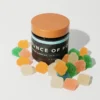








Yes, THC gummies expire. But before you toss out that half-eaten bag from six months ago, it helps to know what "expired" actually means here. In almost every case, an older THC gummy isn't dangerous. It's just weaker, chewier, or less flavorful than the day you bought it.
That distinction matters. Cannabis edibles are food products first, and like any food, they change over time. THC itself also breaks down chemically, separate from the gummy candy around it. This guide covers why THC gummies age, how long they typically last, the real warning signs of a gummy gone bad, and how to store them so they stay fresh as long as possible.
Do THC Gummies Actually Expire?
THC gummies are, at their core, candy. They're made with sugar, gelatin or pectin, flavoring, and citric acid, the same base ingredients found in any gummy bear or fruit snack. Like any candy, that base has a shelf life. Sugar-heavy foods resist bacteria fairly well because bacteria need moisture to survive, and gummies don't hold much of it. Still, over months, that low-moisture base dries out, hardens, or picks up moisture from the air and turns sticky.
Layered on top of that is a second, separate process: cannabinoid degradation. THC reacts to heat, light, and oxygen over time, breaking down slowly no matter how well the candy itself is preserved. So a THC gummy has two aging clocks running at once, one for the candy base and one for the cannabinoid, and neither runs on a fixed schedule.
How Long Do THC Gummies Last?
There's no single number that applies to every gummy on the market. Estimates from cannabis brands and industry sources generally put commercially made THC gummies somewhere between six months and two years when they're stored properly and left sealed until use. That's a wide range, and it should be. A gummy made with real fruit juice and minimal preservatives will age faster than one formulated specifically for shelf stability.
Ingredients play a large role. Preservatives like potassium sorbate or citric acid can slow microbial growth and extend usable life. Packaging matters too, since an airtight, light-blocking container protects both the candy and the THC far better than a thin, clear bag. Manufacturing process, humidity control during production, and how the gummies were stored before they ever reached a shelf all shift that timeline in either direction. The printed date on your package, if there is one, is the most reliable single guide you have, because it reflects that specific brand's formulation and testing.
What Happens to THC Potency Over Time
Why THC Breaks Down
Heat, light, and air are the three main forces working against THC. UV light gradually breaks apart the THC molecule. Warm storage speeds up the same chemical reactions that happen at room temperature, just faster. Oxygen exposure, which occurs every time a package is opened and resealed, adds to the effect as well.
As THC ages, some of it converts into cannabinol, or CBN. This isn't a defect. It's a natural byproduct of THC oxidizing over time, and it happens gradually whether a gummy is a week old or a year old. This process doesn't move at a predictable, universal rate, since your climate, how often you open the container, and the gummy's exact formulation all speed it up or slow it down.
Does Weaker THC Mean a Weaker High?
Generally speaking, yes. As THC content declines and converts toward CBN, a gummy that once delivered a certain effect may feel milder over time. CBN has different properties than THC, and researchers are still studying how it interacts with the body, so an aged gummy isn't simply "less THC" sitting in a jar. It's chemically a slightly different product than it was on day one.
This is part of why guessing your dose based on an old gummy's label can be unreliable. The number printed on the package reflects potency at the time of testing and packaging, not necessarily what remains in the gummy today. If you're relying on an edible for a specific effect, a gummy that's been sitting around for a long stretch may not get you there.
THC Edible Expiration Dates: What They Actually Mean
Not every THC gummy comes with a true expiration date. Many carry a "best by" or "manufactured on" date instead, and the difference matters. A best-by date is a manufacturer's estimate of peak quality, the point after which the product starts to lose flavor, texture, or potency, not a line where the gummy suddenly becomes unsafe.
Actual food expiration dates, the kind that signal a real safety concern, are far less common on shelf-stable candy because the sugar content already resists bacterial growth so effectively. Treat a THC gummy's printed date as a freshness guideline, similar to what you'd see on a bag of jelly beans, rather than a hard safety cutoff. Once you're past it, the product is more likely to disappoint than to harm you, though how disappointing depends entirely on how it was stored in the meantime.
Signs Your THC Gummies May Have Gone Bad
Texture Changes
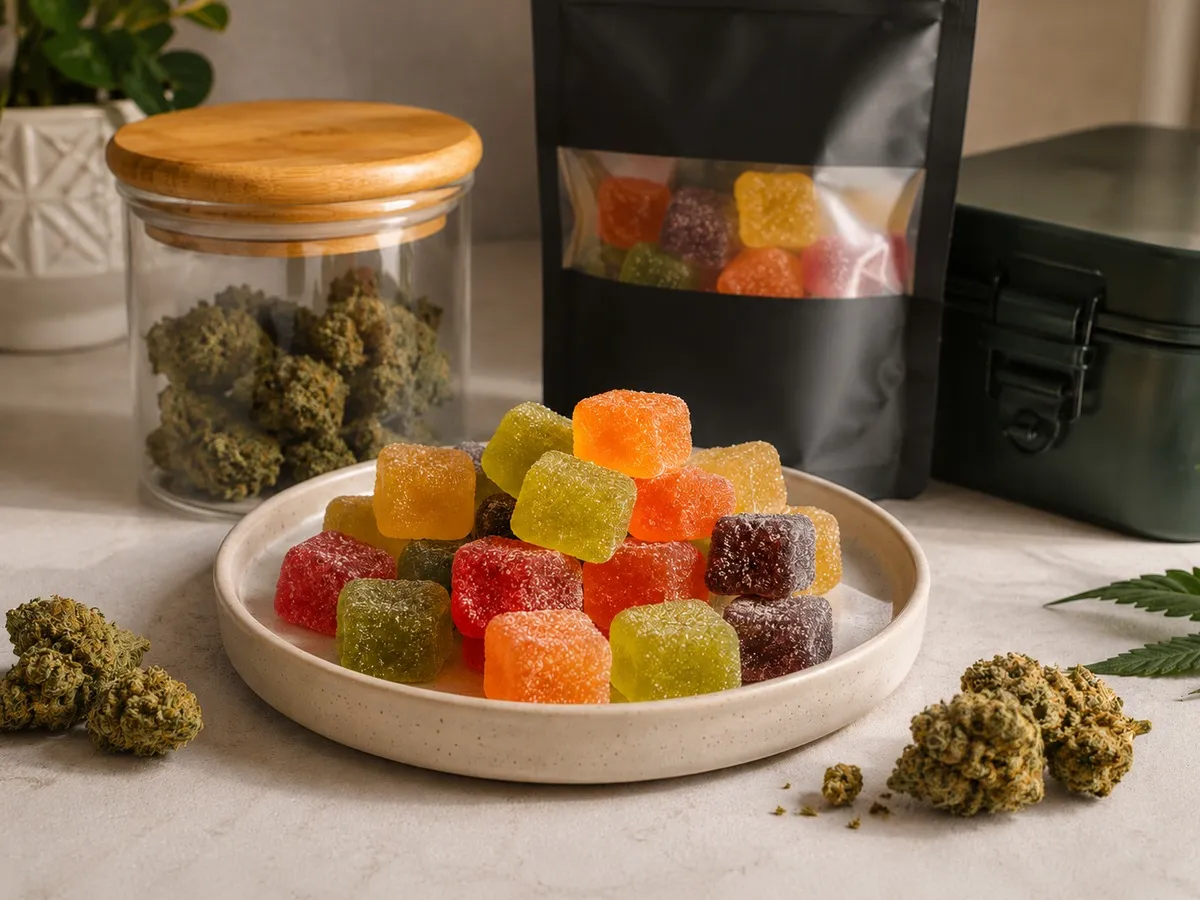
A fresh gummy should give a little when you press it. One that's gone stale usually turns hard, almost like a small rock, because it's lost moisture over time. On the other end, a gummy that feels unusually sticky, wet, or slimy has likely absorbed moisture from the air, which is a different problem and a more serious one, since dampness is what invites mold. Hard is generally just a quality issue. Sticky or slimy deserves a closer look before you eat it.
Flavor and Smell Changes
Taste fades before almost anything else. A gummy that tastes flat, chalky, or noticeably weaker than you remember is simply aging, since both the flavoring compounds and the cannabinoids break down over time. That kind of change is unpleasant but not dangerous.
A sour, musty, or fermented smell is a different story. That kind of odor usually signals moisture damage or the early stages of spoilage, and it's often the first clue before any visible mold shows up. If a gummy smells off in a way that reminds you of spoiled food rather than stale candy, trust that instinct.
Color Fading or Discoloration
Cannabis gummies often fade in color as their dyes and natural pigments break down under light exposure, the same way a printed photo left in the sun eventually washes out. Faded color by itself is a cosmetic sign of age, not a safety concern.
Discoloration is different from fading. Watch for new spots, streaks, or patches in a color that wasn't there originally, especially anything with a greenish, brownish, or grayish tint. That kind of change, particularly paired with a shift in texture or smell, points toward contamination rather than simple aging.
Mold: What to Look For and Why It Matters
Mold on a gummy typically shows up as fuzzy white, gray, green, or black spots, sometimes starting as a faint powdery dusting before it spreads. It can also feel slightly raised or damp compared to the rest of the candy's surface. Because gummies are soft and hold surface moisture, especially once a package has been opened repeatedly, they're more prone to mold than harder candies.
This is the one sign that isn't a judgment call. If you see anything resembling mold, don't try to cut around it or scrape it off. Mold can produce compounds that aren't safe to eat, and by the time it's visible on one gummy, it may have already spread through the batch in ways you can't see. Throw the whole package out.
Are Expired THC Gummies Safe to Eat?
For most people, eating a THC gummy that's past its date results in one thing: a disappointing snack. The high sugar content in gummies creates what food scientists call low water activity, an environment that's genuinely difficult for bacteria and mold to grow in as long as the product stayed dry and sealed. That's why a gummy that's simply old, hard, faded, or bland is very likely still safe, even if it's not very enjoyable.
The calculation changes the moment moisture gets involved. A package that was left open, stored somewhere humid, or exposed to condensation from the fridge creates the conditions mold needs. In that case, age isn't really the issue anymore, contamination is. And because THC content declines unpredictably as a gummy ages, an old edible may also deliver a much weaker effect than the label suggests, which matters if you're dosing for a specific outcome.
As a general rule, stale is usually fine to eat and simply won't taste great. Anything showing mold, an off smell, or a slimy texture should be thrown away without a second thought. When in doubt, especially with something you're consuming for its effects and not just its flavor, it's not worth guessing.
How Lab Testing and COAs Relate to Freshness
Reputable THC gummy brands publish a Certificate of Analysis, or COA, for each product batch. A COA lists the cannabinoid content confirmed by a third-party lab, and it's genuinely useful information, but it comes with a built-in limitation worth understanding: it reflects potency at the moment that specific batch was tested, not a permanent guarantee for the life of the product.
Think of a COA the way you'd think of a "packed on" stamp rather than an ongoing promise. THC levels measured at testing decline over months as the gummy ages, following the same heat, light, and oxidation factors covered earlier in this article. A COA still matters because it tells you the product started from an accurate, verified baseline, and that baseline is far more trustworthy than a label with no testing behind it at all. Ounce of Hope publishes lab results for its products, and checking those before you buy is a simple way to confirm what you're actually getting from a fresh batch.
How to Store THC Gummies Properly
Storage is the single biggest factor within your control. Keep gummies in a cool, dark place, away from direct sunlight and heat sources like a stove, radiator, or car dashboard. UV light and warmth are the fastest ways to degrade both THC and the gummy base.
Keep the original container sealed between uses. Every time a package is opened, air and moisture get in, and that exposure adds up over months of snacking. If the packaging isn't resealable, transfer the gummies to an airtight container once opened.
Refrigeration can extend shelf life, but only if the container is fully airtight, since a fridge introduces humidity that can lead to condensation and stickiness if the seal isn't tight. Freezing works for longer-term storage, though gummies should stay sealed while thawing to avoid absorbing moisture as they warm up. For most people keeping a reasonable supply on hand, a cool cupboard or drawer away from light does the job without any of that extra effort.
Packaging's Role in Shelf Life
Packaging does more than meet regulatory requirements. Child-resistant packaging keeps gummies safely out of reach of kids and pets, which matters given how much THC edibles can resemble regular candy. Beyond safety, that same packaging often does double duty for freshness.
Opaque packaging blocks the UV light that speeds up THC breakdown, while resealable pouches or containers with tight lids limit the air exposure that dries out or dampens the candy inside. Thin, cheap, or clear packaging leaves gummies more exposed to both light and air, which is part of why two gummies with an identical formula can age at noticeably different rates depending on how they were packaged and sold.
How to Make Your THC Gummies Last Longer
Beyond storage conditions, a few simple habits stretch a package's usable life. Buy an amount you'll realistically get through within a few months rather than stocking up because of a sale. THC gummies aren't the kind of product that benefits from bulk buying unless you actually use them at that pace.
Reseal the package tightly after every use, and avoid handling gummies with wet or dirty hands, since that introduces moisture and contaminants directly. If you split a larger batch for gifting or sharing, use small airtight containers rather than leaving gummies loose in a bag. None of these habits guarantee a specific shelf life, since formulation and storage conditions still do most of the work, but they do reduce the odds of a package aging faster than it should.
Closing Thoughts
THC gummies do expire, but in most cases that simply means a milder, less flavorful edible rather than a dangerous one. Pay attention to genuine warning signs, mold, an off smell, or a slimy texture, rather than the printed date alone. Store gummies away from heat, light, and excess air, and you'll get closer to the upper end of their realistic shelf life.
If potency and quality matter to you, look for brands that publish lab-tested results and clear storage guidance on their packaging. That combination, paired with good storage habits at home, is the most reliable way to know what you're actually getting each time you reach for a gummy.