





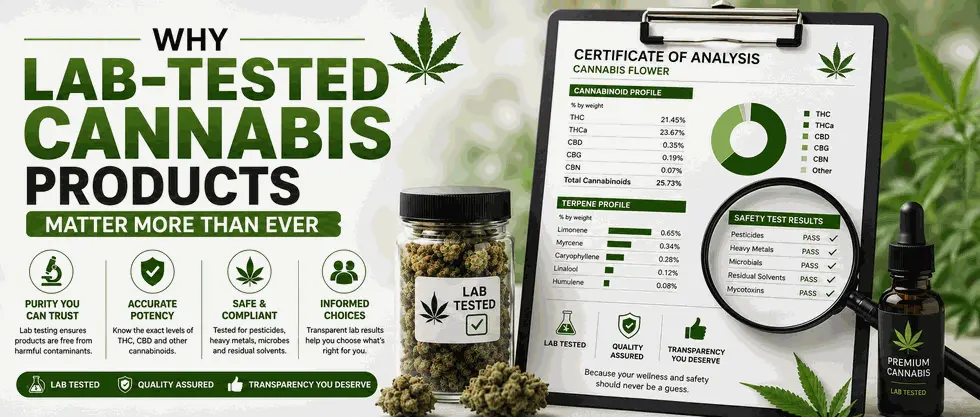
Buying cannabis today looks nothing like it did a decade ago, and that's genuinely a good thing for anyone shopping regularly. What used to run purely on word-of-mouth now moves through licensed dispensaries, regulated growers, and independent labs checking every batch of cannabis products before anything hits a shelf. Lab-tested cannabis products are crucial for ensuring that samples of cannabis are safe for human consumption. It has turned into something buyers actively look for, not a small line buried in the fine print on the label. Potency claims, contamination risks, and product consistency all trace back to whether real cannabis testing happened before that product reached you.
In this article, we'll get into how testing actually works, why potency numbers deserve a closer look, which contaminants most often sneak into products, and why so many brands now build their reputations around quality assurance.
Understanding Cannabis Testing
Potency numbers and contaminant screenings only make sense once you know what testing methods are being used to evaluate cannabis samples. cannabis testing labs are actually checking for in the first place. At its core, testing confirms that a label and its product genuinely match up, ensuring the quality of cannabis products.
What is Cannabis Testing?
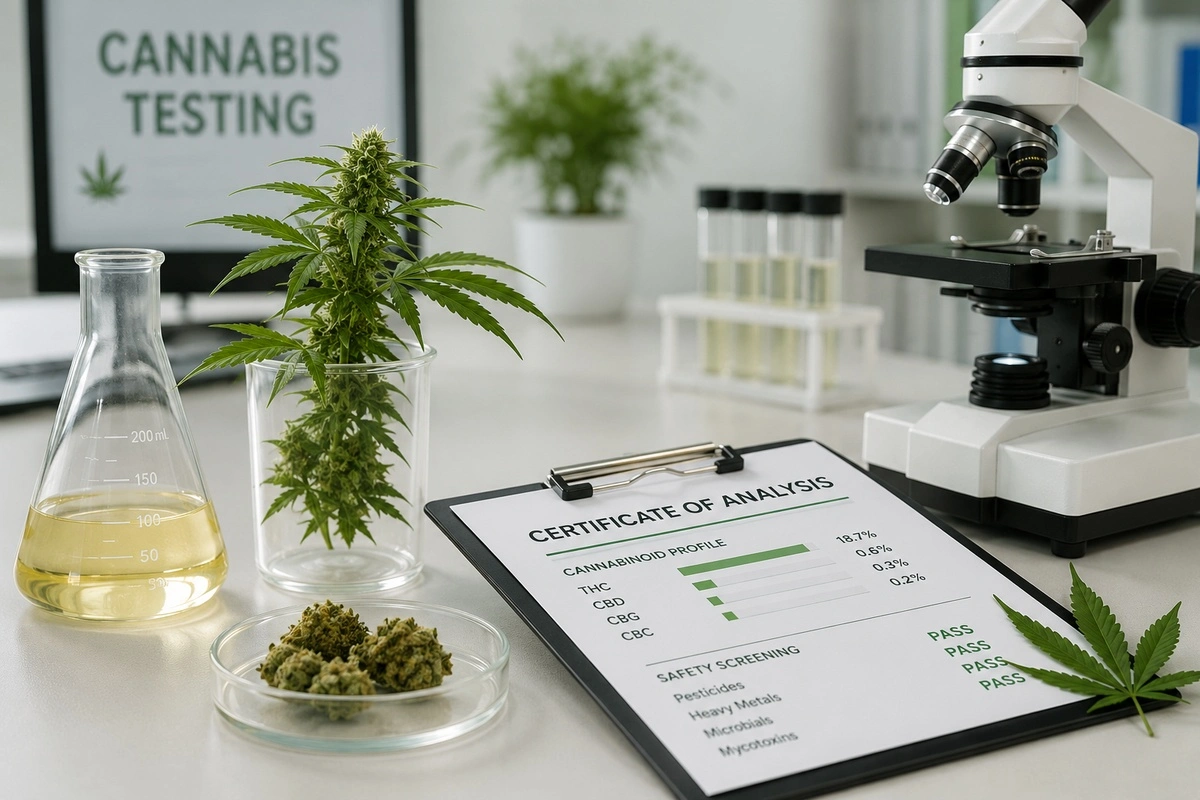
Cannabis testing is simply a laboratory analysis used to identify a batch of cannabis and to test its potency, purity, and general safety before it is released for buying purposes. Technicians break each sample down by cannabinoid content and terpene profile, and screen for contaminants such as pesticides, mold, and heavy metals. It's not a one-and-done certification either, especially for legal cannabis that requires ongoing compliance. Regulated markets require fresh testing on every batch a grower produces, no exceptions.
For example: a farm harvests in March and again in June; both harvests need their own separate results. Soil, weather, and handling shift outcomes each time. Most legal markets simply won't allow a product to skip this step, and honestly, that's the whole point of quality control in the cannabis industry working properly.
The Role of Cannabis Testing Labs
Cannabis testing labs play a crucial role in ensuring the quality of tested cannabis products. work as the outside check that keeps growers and manufacturers honest about what is actually mentioned on their label. These labs stay separate from the businesses whose products they test, and that separation is really what makes the results worth trusting. Most credible labs carry ISO 17025 accreditation. It's basically proof their equipment, staff, and procedures meet a recognized scientific bar, not something they printed on a certificate themselves. Once a sample lands in their hands, technicians run it through chromatography and spectrometry machines built to catch cannabinoid levels down to tiny fractions of a percent. Whatever comes out the other end becomes the tested products that consumers rely on for safety and quality, including cannabis potency. Certificate of Analysis: The paper trail linking one specific batch to its actual, verified makeup is crucial for maintaining trust in legal cannabis.
Importance of Lab-Verified Safety and Quality
Here's the thing: lab-verified safety is crucial for medical cannabis patients who rely on accurate information about cannabis potency. It's the actual difference between trusting a product and just hoping for the best. Cannabis plants soak up whatever's around them while growing, so pesticide residue or heavy metals can end up in a finished product without anyone noticing, at least without testing to catch it. Good testing stops before a consumer ever gets their hands on the product, assuming the cannabis industry bothers enforcing its own rules regarding cannabis labeling requirements and state testing. Medical patients feel this the most, because a batch running slightly off from its usual potency can throw an entire dosing routine out of balance. Recreational buyers aren't off the hook either, even if the stakes feel a bit lower on paper.
Cannabis Product Testing and Potency
Most people buying cannabis care about one thing above everything else: how strong it actually is. Cannabis product testing is essential for ensuring safety and efficacy, especially for medical purposes. is what turns that curiosity into an actual number you can rely on instead of a guess.
Measuring Potency: THC and Cannabinoids
THC and CBD content are essential components of cannabis potency that consumers need to understand. sit at the heart of potency testing, though labs now include minor Cannabinoids like CBG and CBN, which are increasingly recognized in the cannabis market for their potential benefits. In most reports too. These numbers show up as a percentage by weight, so a flower testing at 20% THC packs noticeably more punch per gram than one sitting closer to 12%. Labs also split THCA, the raw, non-psychoactive form found in unheated cannabis, from the activated THC that shows up once heat gets involved. That split matters a lot more for edibles and concentrates than plain flower, since decarboxylation is what flips one form into the other during production, affecting the overall cannabis potency. Comparing potency across products only really makes sense when the formats match, flower against flower, edibles against edibles.
Understanding Testing Results for Consumers
A cannabis testing results sheet stops looking like gibberish pretty fast once you know what each section is actually telling you. THC and CBD numbers give a rough sense of strength, but the terpene column shapes what the experience actually feels like just as much, especially in recreational and medical cannabis. Every report ties back to a batch number, so a quick check that it matches your cannabis sample keeps you from reading results for a batch you didn't even buy. The contaminant section tends to get skipped entirely, which is a mistake. This is where you'd actually see whether pesticide and heavy metal screening happened at all or not. Jumping straight to the THC percentage feels natural, but it also means missing most of what the report was written to say about the quality control of dried cannabis.
The Impact of Potency on Consumer Experience
Potency shapes the whole experience more than most casual buyers give it credit for. Someone with a lower tolerance can get blindsided by a high-THC product, while an experienced user might find the same product barely does anything. Then terpenes throw another variable into the mix, since two products can share identical THC percentages and still feel worlds apart depending on what else is in them. Myrcene-heavy batches are often highlighted in the cannabis testing industry for their unique effects. tend to lean relaxing, while limonene shows up more often in products people describe as brighter or more energizing in the California cannabis market. Paying attention to both potency and terpene data, instead of fixating on THC alone, is what actually leads to purchases you don't regret later.
Contaminants in Cannabis Products
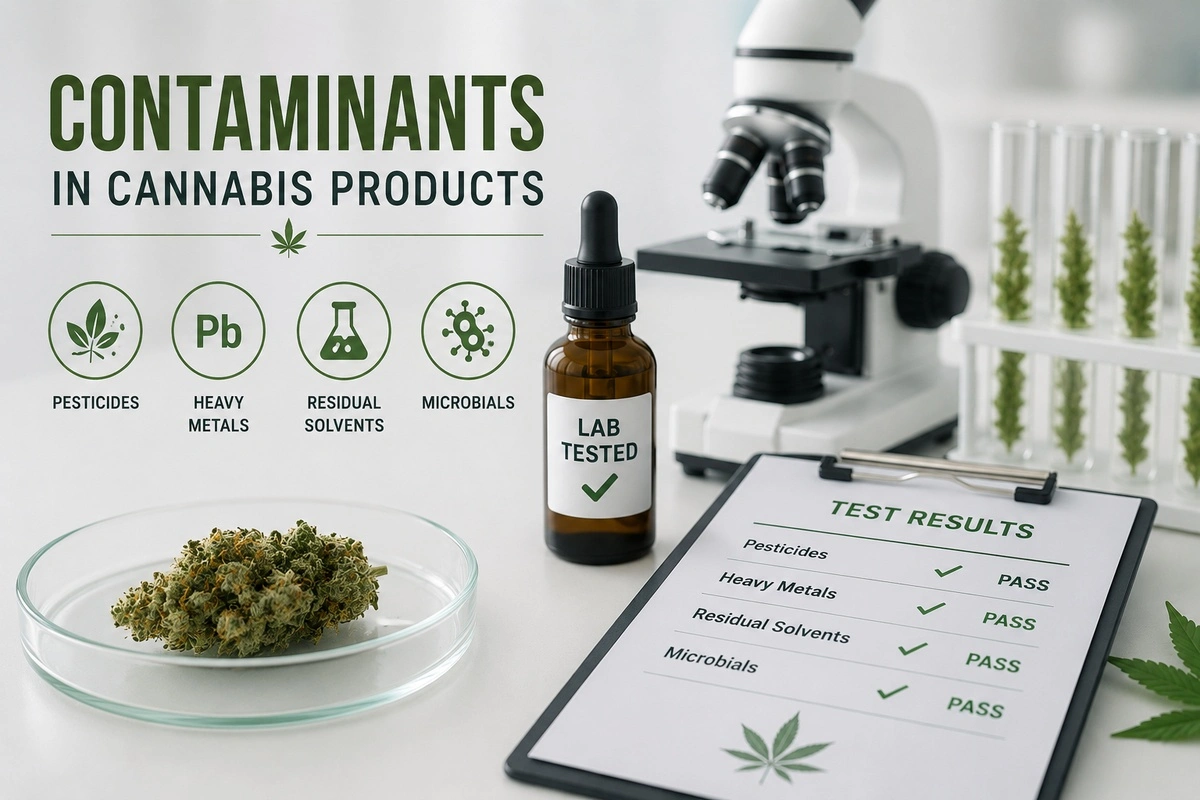
Potency gets most of the attention, but contamination is really where things get serious for anyone buying cannabis flower regularly. Contaminants in cannabis products can slip in at almost any stage; growing, processing, packaging, and testing exist specifically to catch them before you do.
Common Contaminants: Pesticides and Heavy Metals
Pesticides show up more often than most buyers assume, mainly because cannabis plants absorb chemicals from soil, water, and whatever gets sprayed nearby during cultivation. Some growers use pesticides banned for consumable crops simply because cannabis regulation lagged behind agricultural standards for years. Heavy metals sneak similarly, pulled up from contaminated soil or picked up through fertilizers that weren't properly screened beforehand, posing risks to medical cannabis use. Lead, arsenic, cadmium, and mercury are the ones cannabis labs watch closest, since even small amounts build up in the body over repeated use. A batch can look completely fine, or smell nice. But they still carry contamination levels nobody would notice without running it through a lab first.
Residual Solvents and Their Risks
Concentrates and vape products carry a different risk entirely, tied to how they're actually made rather than how they're grown. Extraction often uses solvents like butane, propane, or ethanol to pull cannabinoids out of raw plant material efficiently. It is crucial for producing quality cannabis flower. If it is done in the right way, manufacturers purge these solvents out entirely before the final product ever gets packaged. If it is done poorly, trace amounts stick around, and inhaling leftover solvent residue isn't something anyone wants happening in their lungs repeatedly. Labs test specifically for residual solvents in concentrates, since this category carries risks that flower products simply don't have to deal with.
How Testing Labs Identify Contaminants
Labs rely on a handful of specialized techniques to catch contamination that's completely invisible to the naked eye or nose. Gas chromatography and mass spectrometry are used constantly in cannabis labs, both built to separate and identify individual chemical compounds within a sample, even at trace levels. Pesticide screening usually checks for dozens, sometimes hundreds, of specific compounds banned across different regulated markets. Heavy metal testing runs through atomic absorption spectroscopy, a cannabis testing method sensitive enough to detect metals in parts per billion. Microbial screening rounds things out, checking for mold, yeast, and bacteria that could cause real harm if inhaled or ingested, especially in edible products. None of this happens by eyeballing a sample; it takes actual equipment and trained technicians running proper protocols every time to ensure the quality of cannabis products.
The Importance of Quality and Safety in Commercial Cannabis
Testing matters the most as it actually changes what reaches store shelves clearly. Quality and safety in commercial cannabis can not be ignored. Licensing, consumer habits, and brand reputation all connect back to this same foundation within the cannabis testing industry.
Ensuring Safety in Licensed Cannabis Products
Licensed dispensaries operate under rules that unlicensed sellers simply don't follow, and independent testing sits right at the center of that gap. Every product sold legally needs a Certificate of Analysis tied to its specific batch before it's allowed on a shelf at all, ensuring compliance with Washington state regulations. Regulators periodically audit dispensaries too, checking that displayed COAs actually match the products they're supposed to represent. Illegal or gray-market products skip this entirely, which explains why contamination and inflated potency claims show up so much more often outside licensed channels. Buying through a properly licensed shop isn't a guarantee of perfection, but it does mean someone's actually checking.
Consumer Awareness and Lab Shopping
More buyers now treat lab results the same way they'd check nutrition labels or ingredient lists on regular groceries. Comparing COAs and shopping across two or three brands of THC products before buying has become fairly common, especially among people who use cannabis regularly. Some shoppers even ask dispensary staff directly which labs a brand uses, since certain labs have earned better reputations for accuracy than others. QR codes on packaging make this easier than it used to be, letting anyone pull up original lab results in seconds rather than trusting a printed slip. This small habit genuinely pushes brands toward better transparency over time.
Building Trust through Quality Assurance
Brands that lean into visible, consistent testing tend to build loyalty that lasts a lot longer than a single good batch. Cannabis quality assurance isn't just about passing a test once; it's about proving the same standard holds up harvest after harvest. Companies publishing full-panel COAs openly, rather than burying them, usually end up with a stronger reputation across review sites and word of mouth. Consistency matters here more than almost anything else when it comes to ensuring the quality of cannabis products. One bad batch can undo months of trust built through reliable testing is necessary to ensure that cannabis products are tested for contaminants like pesticides in cannabis. In a market this crowded, trust built on real testing data has quietly become one of the biggest competitive advantages a cannabis brand can have.
TLDR
Nobody should gamble on what's actually in their cannabis product, yet plenty of buyers still do without realizing it, especially when it comes to state testing. Labs test the potency, detect pesticides and heavy metals, and verify the packaging is consistent with what's inside. Untested markets still let cannabis use happen without proper oversight. Contamination and inflated THC levels can undermine the integrity of tested cannabis products. Numbers slide through regularly. Checking lab results before buying genuinely changes how safe and reliable your cannabis experience turns out.
FAQs
Q. How often must licensed cannabis products get retested?
Every batch needs its own fresh round of testing, and that's true across most regulated markets right now. A farm harvesting in spring and again in summer can't reuse one report for both. Soil, weather, and handling shift things enough that old results just don't apply anymore.
Q. What happens when a cannabis product fails lab testing?
Failed batches get pulled off shelves fast in any properly regulated market. Contamination failures usually mean the batch gets destroyed rather than sold under a different label. A few states allow fixing minor issues like moisture, but pesticide or metal contamination pretty much ends things right there.
Q. Does lab testing affect the price of cannabis products?
Yes. It does, and buyers end up covering that cost eventually, whether they notice it or not. Brands that run full testing on every batch tend to charge a bit more than those who do not provide lab reports, particularly in the competitive market of retail cannabis. This gap often reflects genuine safety work in the cannabis industry, not just a marked-up price tag.
Q. Is homegrown cannabis subject to any lab testing requirements?
No. Home growers skip mandatory lab testing under most current rules people deal with today. Whatever risk exists with contamination falls entirely on the grower themselves in the cannabis industry, highlighting the importance of cannabis testing methods. Nobody is double-checking their own work. This is exactly why testing matters so much once you're buying instead of growing your own.
Q. How long does a Certificate of Analysis remain valid for a batch?
The COA data belongs to one batch, and it doesn't come with an expiration date printed anywhere on it. It is essential for compliance with cannabis labeling requirements. Once that batch sells out, the report has nothing to do with whatever comes next, even under the same brand name, especially when considering higher THC levels in subsequent batches of tested products. Every new harvest starts fresh, with its own testing and its own paperwork.