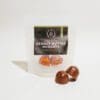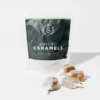




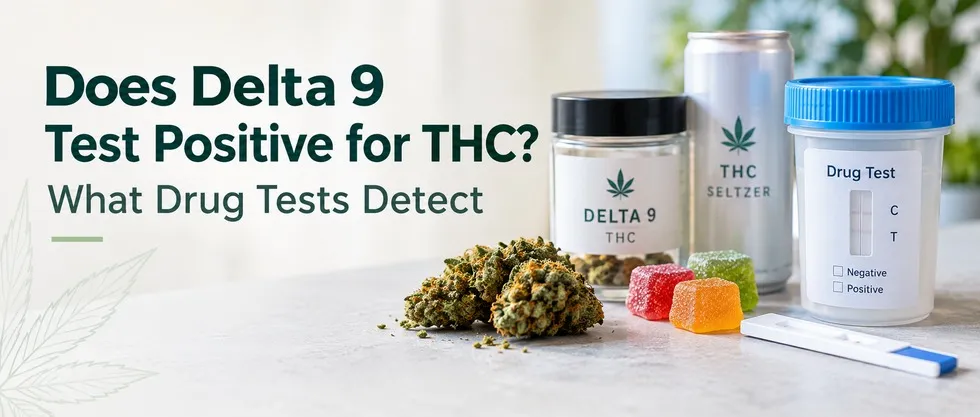
Maybe you had a couple of delta 9 gummies last weekend. Then a job offer showed up in your inbox, and it comes with a drug screen. Now you're wondering if you just made a mistake.
Here's the honest answer. Yes, Delta-9 THC can make you test positive for THC, and it doesn't matter if it came from hemp or marijuana. Most tests look for THC-COOH, which your body makes as it breaks THC down. Whether you'll actually test positive comes down to the kind of test, its cutoff level, how much you used, and how often.
Let's walk through what these tests really look for, why "hemp-derived" doesn't help you here, and why two people can get two different results.
Does Delta 9 Show Up on a Drug Test?
Delta-9 THC is the part of cannabis that gets you high. It's also exactly what standard THC drug tests were designed to catch. So if you're asking whether delta 9 tests positive for THC, the short answer is yes, it can.
That said, not everyone who uses Delta-9 fails every test. A result only counts as positive when the level in your sample goes over a set limit. Some people stay under it. The trouble is, you can't know ahead of time which side you'll land on.
If you're still getting to know these products, our Delta 9 collection shows the different forms they come in. For testing purposes, though, the rule is simple. If it has Delta-9 THC in it, it can show up.
What Do THC Drug Tests Actually Detect?
This part surprises a lot of people. Most THC tests aren't looking for the THC you took. They're looking for what your body turned it into.
THC vs. THC-COOH: The Metabolite Most Tests Target
Once Delta-9 THC is in your system, your liver gets to work on it. First it makes a compound called 11-hydroxy-THC. Then it breaks that down again into THC-COOH. SAMHSA's federal drug testing manual calls THC-COOH the major metabolite of THC, and it's the main thing urine tests go after.
THC-COOH won't make you feel anything. So you can feel totally clear-headed and still fail. The test isn't checking whether you're high right now. It's picking up a trace of use from earlier.
Screening Tests vs. Confirmation Tests
Work drug tests usually happen in two rounds.
Round one is a quick screen called an immunoassay. It checks for a whole family of THC-related compounds at once. It's cheap and fast, but it isn't very precise.
If that screen doesn't come back clean, the sample can go to a lab for a second look. The lab uses a more exact method, such as gas chromatography–mass spectrometry (GC-MS). Under federal rules, this step zeroes in on THC-COOH and measures how much is there.
Be aware that not every test gets that second round. Some instant cup tests just give you a result on the spot. It's fair to ask whether yours will be confirmed by a lab.
What Cutoff Levels Mean
A drug test doesn't flag you for having any THC at all. It flags you when the level goes over a cutoff.
For federally regulated workplace urine tests, the HHS Mandatory Guidelines set those cutoffs. The screen is set at 50 ng/mL for marijuana metabolites. The lab confirmation is set at 15 ng/mL for THC-COOH. A sample has to hit both to be reported as positive.
So if your screen comes in above 50 but the lab finds less than 15, the result is reported as negative. Keep in mind that private employers and labs outside the federal program can use different numbers. When in doubt, ask what your test uses.
This part surprises a lot of people. Most THC tests aren't looking for the THC you took. They're looking for what your body turned it into.
THC vs. THC-COOH: The Metabolite Most Tests Target
Once Delta-9 THC is in your system, your liver gets to work on it. First it makes a compound called 11-hydroxy-THC. Then it breaks that down again into THC-COOH. SAMHSA's federal drug testing manual calls THC-COOH the major metabolite of THC, and it's the main thing urine tests go after.
THC-COOH won't make you feel anything. So you can feel totally clear-headed and still fail. The test isn't checking whether you're high right now. It's picking up a trace of use from earlier.
Screening Tests vs. Confirmation Tests
Work drug tests usually happen in two rounds.
Round one is a quick screen called an immunoassay. It checks for a whole family of THC-related compounds at once. It's cheap and fast, but it isn't very precise.
If that screen doesn't come back clean, the sample can go to a lab for a second look. The lab uses a more exact method, such as gas chromatography–mass spectrometry (GC-MS). Under federal rules, this step zeroes in on THC-COOH and measures how much is there.
Be aware that not every test gets that second round. Some instant cup tests just give you a result on the spot. It's fair to ask whether yours will be confirmed by a lab.
What Cutoff Levels Mean
A drug test doesn't flag you for having any THC at all. It flags you when the level goes over a cutoff.
For federally regulated workplace urine tests, the HHS Mandatory Guidelines set those cutoffs. The screen is set at 50 ng/mL for marijuana metabolites. The lab confirmation is set at 15 ng/mL for THC-COOH. A sample has to hit both to be reported as positive.
So if your screen comes in above 50 but the lab finds less than 15, the result is reported as negative. Keep in mind that private employers and labs outside the federal program can use different numbers. When in doubt, ask what your test uses.
Does Hemp-Derived Delta-9 Test Positive?
It does. Hemp-derived Delta-9 can cause a positive THC drug test, the same as Delta-9 from marijuana. Chemically, they're the same molecule. Your body breaks both down into the same THC-COOH, and the test has no idea which plant it came from.
This is where plenty of people get tripped up. "Federally compliant" is about how a product is classified by law. It tells you nothing about how it'll look on a drug test. Being legal and being drug-test-safe just aren't the same thing.
The U.S. Department of Transportation says as much about CBD products. Its official notice says Medical Review Officers will still confirm a lab-verified positive, even if the employee says they only used CBD.
A quick word on the law. The 2018 Farm Bill allowed hemp products with up to 0.3% Delta-9 THC by dry weight. A federal law signed in November 2025 rewrites the definition of hemp and will restrict most intoxicating hemp-derived THC products. In September 2026, its start date for most products was pushed back to December 11, 2026. Your state may have its own rules too, and things could shift again. Either way, none of it changes how a drug test reads your sample.
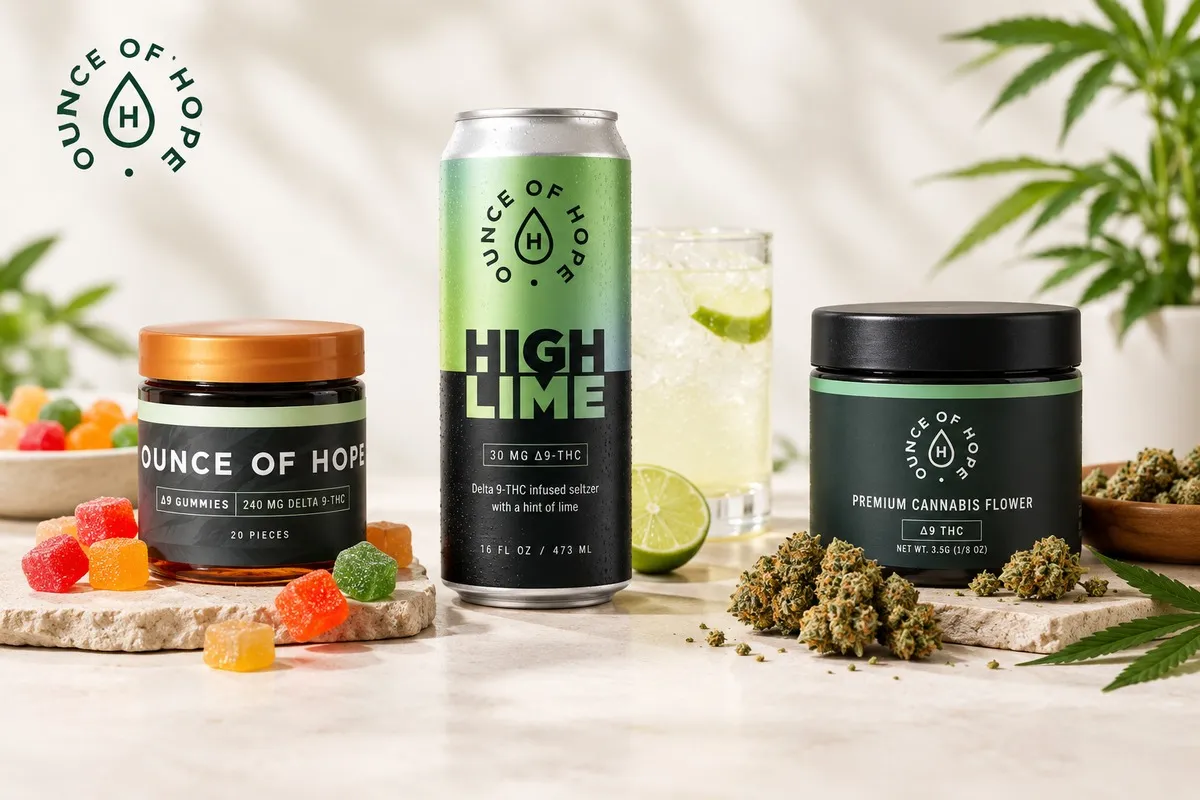
One good habit is to check how much THC is actually in what you're using. Ounce of Hope posts third-party lab results for its products, so you can see the THC content batch by batch.
Do Delta 9 Gummies, Seltzers, and Flower Test Differently?
How you take THC changes how it feels and how fast it hits. What it doesn't change is whether a test can find it.
Delta 9 Edibles and Gummies
When you eat delta 9 edibles, the THC goes through your stomach and liver before it reaches the rest of your body. Along the way, your liver makes more 11-hydroxy-THC than it would if you smoked. That's part of why edibles take longer to kick in and often last longer.
The slow start can be a trap. People feel nothing after an hour, take another gummy, and end up with more THC than they planned. More THC means more for a test to pick up. Our guide on how long it takes edibles to hit covers why waiting matters. If timing is your main worry, read how long delta 9 gummies stay in your system. You can also compare serving sizes across our edibles.
Delta 9 THC Seltzers and Beverages
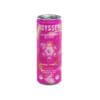
A delta 9 THC seltzer can feel like the lighter option, and many drinks do use smaller servings. Still, a small dose is a dose. Have a few cans over an evening and it adds up fast. Two 5 mg seltzers give you the same THC as one 10 mg serving.
Your body handles THC drinks a lot like edibles, so they leave the same metabolites behind. If you enjoy THC beverages, treat them like any other THC product when a test is on the calendar.
THC Flower and Vapes
Smoke or vape THC flower and the THC reaches your blood within minutes. You feel it sooner, and it usually wears off sooner than an edible does.
But wearing off faster doesn't mean clearing a test faster. Inhaled Delta-9 THC still gets broken down into THC-COOH. THCa flower works the same way once it's lit. THCa on its own isn't intoxicating, but heat turns it into Delta-9 THC. You can read more on our flower and THCa pages.
What Types of Drug Tests Can Detect Delta-9 THC?
There are four main kinds of THC drug test. Each one uses a different sample, and each one looks back over a different stretch of time.
Urine Tests
If your job tests you, it's probably a urine test. These are the most common by far. They look for THC-COOH, which builds up and leaves your body slowly. That's why a urine test can catch use from days earlier, and sometimes longer for people who use often.
Saliva (Oral Fluid) Tests
A saliva test checks for THC itself in your mouth. It's better at catching recent use than a urine test is. Federal rules now allow oral fluid testing for some regulated jobs, and plenty of private employers use it as well.
Blood Tests
Blood tests measure active THC in your bloodstream. Those levels drop pretty quickly after you use, so the window is shorter. You're less likely to see one for a routine job screen. They tend to come up after an accident or when someone might be impaired.
Hair Tests
Hair tests look further back than any of the others. They cost more, so they're used less often. Their real job is showing a pattern of past use, not what you did last weekend.
How long each test can pick up THC really depends on the person, so we gave that its own guide. Check out how long Delta 9 stays in your system for the details.
Why Do Drug Test Results Vary From Person to Person?
Two friends can share the same pack of gummies and walk away with different results. A handful of things explain it.
The biggest one is usually how often you use. THC is fat-soluble, which means it can settle into body fat and trickle out slowly. Someone who uses every day tends to carry more metabolites than someone who tried one gummy once.
Dose matters too. A strong product, or several small servings close together, gives your body more THC to work through.
Then there's your own body. Body fat, metabolism, and general health all play a part in how fast THC clears. These differences are hard to guess, even for you.
Timing and product type count as well. Edibles and inhaled THC are processed differently, and how recently you used before the test makes a real difference.
Finally, the test itself. Urine, saliva, blood, and hair tests all work differently, and the cutoff and whether a lab double-checks the result can change the outcome.
With all of that in play, nobody can promise you a set timeline or a clean result. If a product or website does, be skeptical.
Can THC + CBD Products Make You Fail a Drug Test?
If there's THC in them, yes. A lot of people assume a 1:1 THC:CBD product is safer because the CBD "balances out" the THC. That might be true for how it feels, but a drug test doesn't care. Standard workplace tests look for THC metabolites, not CBD, so the THC in that product can still be picked up.
Even products sold mainly as CBD aren't totally risk-free. Full-spectrum CBD can contain small amounts of THC, and with regular use those little amounts can add up. The DOT also warns that CBD labels aren't always accurate, since the FDA doesn't certify THC levels in CBD products.
Broad-spectrum and isolate products are made to have little or no THC. That can lower your risk, but it can't take it to zero. If you use CBD products and you get tested, look at each batch's lab report and check your employer's rules before you count on anything.
Does Delta 8 or THCa Show Up the Same Way as Delta 9?
Switching to a different cannabinoid won't get you around a THC test.
Take Delta 8. Its structure is very close to Delta-9. Published lab research found that Delta-8's main metabolite reacts strongly with common cannabinoid screening tests. Put simply, Delta 8 products can set off a THC screen too.
THCa is even more straightforward. When you heat it, like when you smoke or vape flower, it turns into Delta-9 THC. From there, your body treats it like any other Delta-9. We go into this more in Does THCa Show Up on a Drug Test?
What Happens If You Test Positive After Using Delta 9?
In regulated testing programs, a lab-confirmed positive gets sent to a Medical Review Officer, or MRO. That's a licensed doctor whose job is to look at the result and see if there's a legitimate medical reason for it.
With THC, that's a hard case to make. The DOT has said plainly that CBD use isn't a legitimate medical explanation for a confirmed marijuana-positive result. In real life, "I only used a legal hemp product" probably won't turn a confirmed positive into a negative in a regulated program.
This hits hardest for people in safety-sensitive jobs, like truck drivers, pilots, and school bus drivers. If your job falls under DOT rules, federal testing rules apply no matter what your state allows. For everyone else, what happens next depends on your employer's policy and your state's laws. If you're not sure where you stand, ask HR or talk to a qualified attorney.
Common Myths About Delta 9 and Drug Tests
There's a lot of bad advice floating around about THC and drug tests. Here are the myths we hear most.
"Hemp Delta-9 is legal, so it won't show up." Unfortunately, the law and the lab are two separate worlds. The test reads the compound in your sample, not the label on the package.
"One gummy isn't enough to fail." Maybe, maybe not. It depends on the dose, your body, the timing, and the test's cutoff. It's just not something you can safely bet on.
"Drinking a ton of water or a detox drink will clear it." Labs check samples for signs of dilution and tampering as a matter of routine. A diluted or invalid sample can cause problems of its own. Shortcuts like these aren't worth trusting.
"Edibles don't count because you're not smoking." Eaten THC still becomes THC-COOH. Edibles can show up on a test just like a joint can.
"A CBD product means zero THC." As we covered above, many CBD products have some THC in them, and labels aren't always right.
How to Make Informed Choices If You're Drug Tested
If drug tests are a regular part of your life, a few simple habits can save you a lot of stress.
- Know the rules first. Read your employer's, school's, or program's testing policy before you use any THC product.
- Read the label and the lab report. Know how much THC is in each serving. That's why Ounce of Hope publishes its lab results.
- Be realistic about the risk. If you're tested often or work in a safety-sensitive job, the only sure way to avoid a THC-positive result is to skip THC products.
- Check with a professional. If you take medication or have a health condition, talk to your healthcare provider before trying cannabis products.
So, Will Delta 9 Show Up on Your Drug Test?
It can, and it often does. Hemp-derived or not, Delta-9 THC leaves behind the same THC-COOH that drug tests are built to find. Your own result comes down to how much you use, how often, your body, and the test in front of you.
If you know a test is coming, plan ahead and get familiar with your policy. And if timing is your main question, our guide on how long Delta 9 stays in your system is a good next read.
Frequently Asked Questions
Can one Delta 9 gummy make you fail a drug test?
It can. It depends on how much THC is in the gummy, your body, how recently you took it, and the test's cutoff. Occasional users usually clear THC faster than regular users, but no amount is guaranteed safe for everyone.
Will a 5 mg Delta 9 seltzer show up on a drug test?
It might. A 5 mg delta 9 THC seltzer still has Delta-9 THC in it, and your body turns it into the same THC-COOH that tests look for. If you drink more than one can, you're taking in more THC.
Can a drug test tell the difference between hemp and marijuana THC?
No. Standard tests look for THC metabolites, and Delta-9 from hemp is the same compound as Delta-9 from marijuana. The test can't tell which plant it came from.
Is THC included in a standard 5-panel drug test?
Yes. The federal and DOT 5-panel urine test checks for marijuana metabolites (THC-COOH), along with cocaine, amphetamines, opioids, and PCP. Most non-federal panels include THC too, but it's worth checking what yours covers.
Can CBD oil cause a positive THC drug test?
CBD itself usually isn't what tests are looking for. The catch is that many CBD products, especially full-spectrum ones, contain some THC. Use them regularly and that THC can build up enough to cause a positive result.
Can secondhand cannabis smoke make you test positive?
Being around smoke can leave small amounts of THC metabolites in your body. Under normal conditions, it's considered unlikely to push you over federal workplace cutoffs. Heavy exposure in a closed space is a different story, though, and results depend on the setting and the test.
How long should I stop using Delta 9 before a drug test?
There isn't one answer that fits everyone. It depends on how often you use, how much, your body, and the type of test. Our guide on how long Delta 9 stays in your system walks through those factors in more detail.