





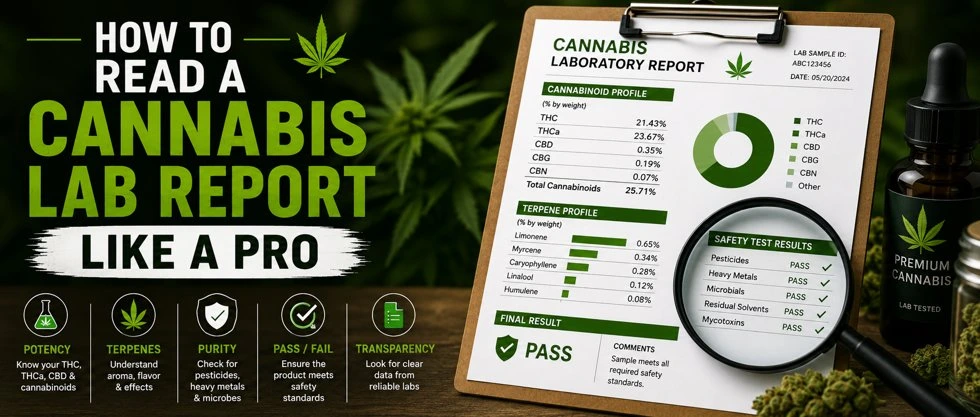
Ever picked up a cannabis product, glanced at that detailed cannabis lab report and just put it back down? You're not alone. Cannabis Lab reports look intimidating at first, packed with numbers, percentages, and terms that sound more like a chemistry exam than something meant for regular buyers. But once you know what you're actually looking at, reading a cannabis lab report becomes second nature pretty quickly.
This guide walks through exactly that, breaking down the Certificate of Analysis, potency numbers, terpene profiles, and the red flags worth knowing before you trust any product on the shelf.
Understanding the Cannabis Lab Report
Before diving into numbers and percentages, it helps to understand why these reports exist in the first place. A cannabis lab report isn't just paperwork tacked on for compliance reasons, it's the closest thing you'll get to proof that what's on the label actually matches what's in the jar. Every legitimate cannabis product sold through a licensed dispensary should come with one, whether it's a flower, an edible, or a concentrate. Learning to read this document properly puts real control back in your hands as a buyer.
What is a Certificate of Analysis (COA)?
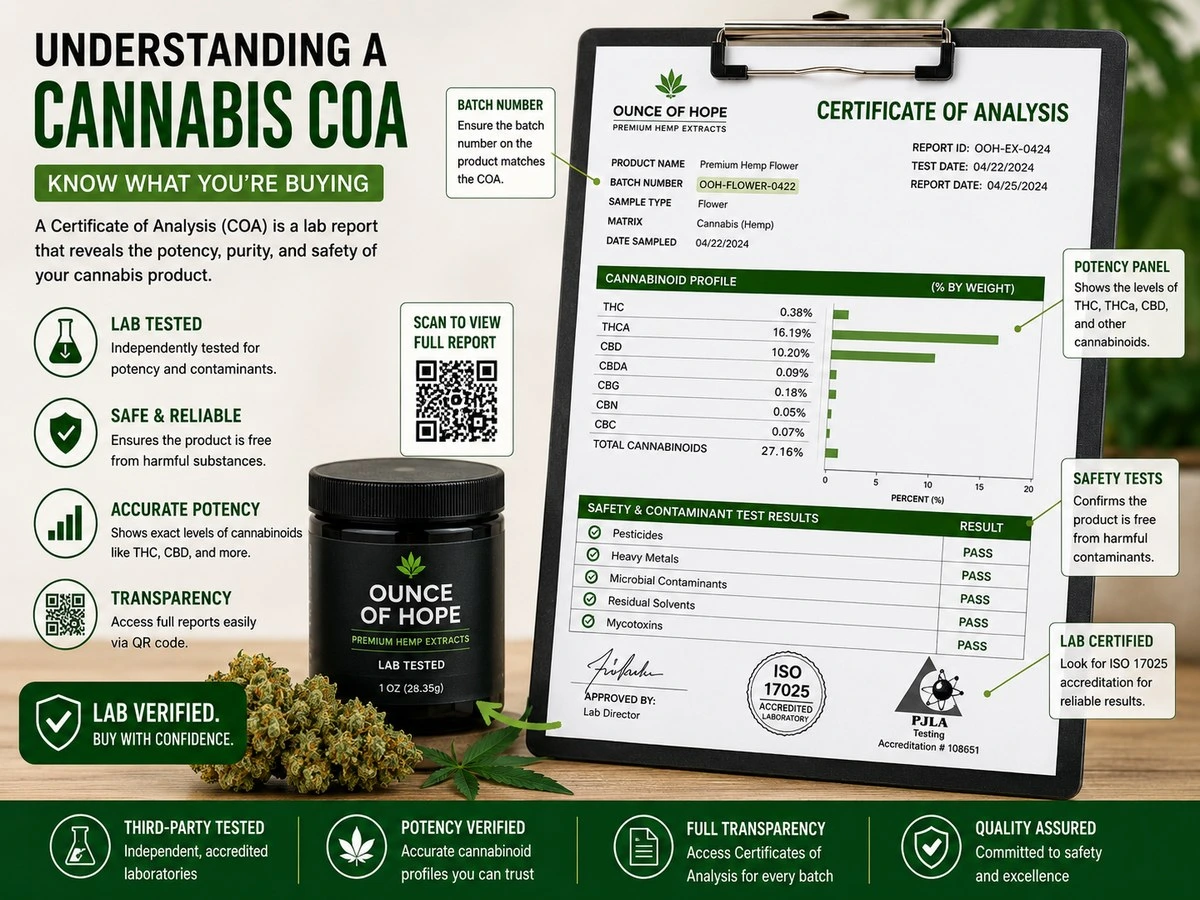
A Certificate of Analysis or COA is the official report a testing lab releases after analyzing a cannabis batch. It lists everything from cannabinoid content to contaminant screening results, all tied to one specific batch number. Think of it as a report card for that particular product, not the brand overall, since potency and purity can shift slightly from batch to batch. Dispensaries are typically required to make these available, either printed near the product or accessible through a QR code on the packaging. If a shop can't produce one when asked, that's usually your first sign to walk away and buy elsewhere.
Key Components of a Lab Report
Most COAs follow a fairly predictable structure once you know what to look for. Batch identification information is usually found at the top of the report and consists of information such as the name of the product, batch number, and date of the test. Below the batch identification information, you'll find the cannabinoid panel containing THC and CBD levels and sometimes even minor cannabinoids such as CBG and CBN, all expressed in percentages. Toward the bottom, most reports include contaminant screening, covering pesticides, heavy metals, microbial content, and residual solvents if the product involves any extraction process. Each section tells a slightly different part of the story, and skipping straight to just the THC number means missing a lot of useful context.
Importance of Lab Testing in Cannabis
Lab testing exists mainly to protect consumers from products that either misrepresent their potency or, worse, carry something genuinely harmful. Cannabis plants absorb whatever's in their growing environment, which means pesticides, mold, or heavy metals can end up in the final product without proper screening. Testing catches these issues before anything reaches a shelf, at least in properly regulated markets. It also keeps brands honest about potency claims, since inflated THC numbers have become a real problem across parts of the industry. For medical users especially, accurate lab data isn't optional. It directly affects dosing and overall treatment reliability.
Decoding Lab Results
Once you understand what a lab report contains, the next step is actually making sense of the numbers themselves. This part trips up a lot of people, mostly because percentages and unfamiliar terpene names don't mean much without context. Breaking each section down individually makes the whole report far less overwhelming.
Interpreting Potency Levels
THC and CBD percentages get the most attention, and for good reason. They largely determine how a product will actually feel. A flower product testing at 20% THC will hit noticeably harder than one sitting around 12%, assuming everything else stays equal. It's worth remembering these numbers represent total cannabinoid content by weight, not a guarantee of exact experience, since individual tolerance plays a huge role too. Some reports also break down THCA vs activated THC, too. It matters more for edibles and concentrates than raw flowers. Comparing potency across products only really works when you're comparing similar formats, since flower, edibles, and concentrates all behave differently.
Analyzing Terpene Profiles
Terpenes don't get nearly enough attention, even though they shape a huge part of how cannabis actually feels and smells. These aromatic compounds cover everything from scent to the overall character of the experience. Myrcene, for example, often gets linked to relaxation, while limonene tends to show up in products associated with a brighter, more energizing feel. A lab report listing high myrcene content alongside high THC probably won't feel the same as a similar THC percentage paired with mostly limonene. Paying attention to terpene profiles, not just THC numbers, genuinely changes how well you can predict a product's actual effect.
Identifying Batch Numbers and Their Significance
Every COA ties back to a specific batch number, and that detail matters more than most casual buyers realize. Cannabis isn't manufactured like a standardized product, meaning potency and quality can shift meaningfully between one harvest and the next, even under the same brand name. Checking that the batch number on your product's packaging actually matches the one listed on the COA confirms you're looking at the correct, current results. Some dispensaries occasionally display outdated or mismatched reports by mistake, which makes this small check genuinely worth doing. If the numbers don't line up, it's reasonable to ask staff for the correct, current documentation before buying.
Red Flags to Watch For
Not every lab report tells the full truth, and honestly, that's the part most buyers never think to question. A shaky cannabis lab report can look perfectly official at first glance, clean formatting, official-looking logos, numbers everywhere, and still be hiding something important. Once you've read enough of these reports, though, the weak ones tend to stand out fairly quickly.
Common Issues in Lab Reports
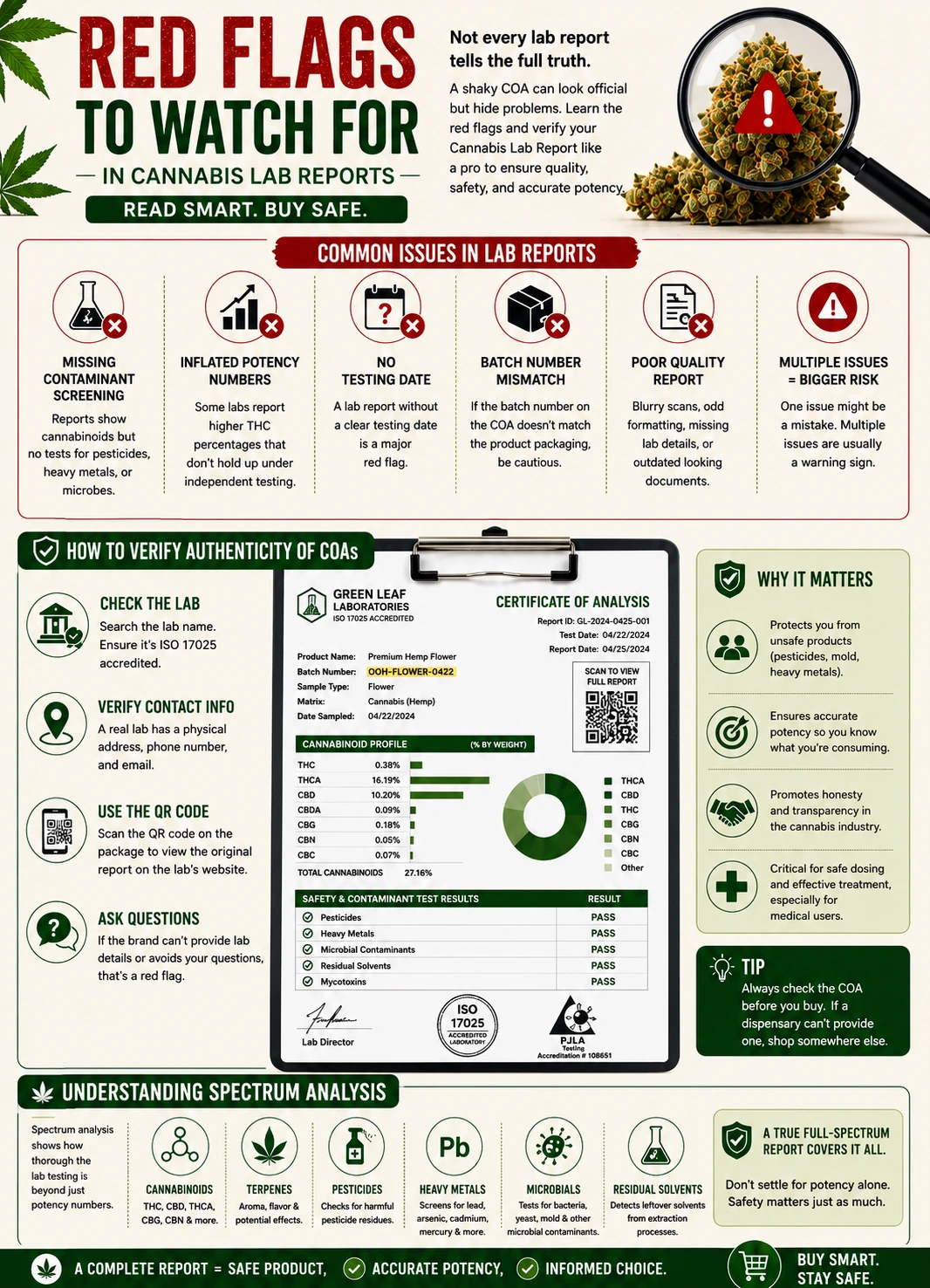
A few problems keep showing up once you start comparing enough COAs side by side. Missing contaminant screening is probably the most common reports that proudly display cannabinoid content but conveniently leave out pesticide or heavy metal results. Inflated THC potency numbers come up a lot, too. This isn't just a rumor. Certain labs have built a reputation in the industry for reporting percentages that don't hold up under independent retesting. A report without any testing date printed on it should raise an eyebrow and so should one where the batch number simply doesn't match what's on the packaging in your hand. Sometimes it's smaller things, a blurry scan, odd formatting, a document that just doesn't look like it came from a real lab. None of these problems prove fraud on their own, but stacked together. They're usually worth a second look before you buy.
How to Verify Authenticity of COAs
Figuring out whether a Certificate of Analysis is legitimate honestly isn't that hard once you know a couple of things to check. The lab's name is a good starting point. A quick search usually reveals whether it carries proper accreditation. Moreover, an ISO 17025 certification tends to separate the serious testing facilities from the questionable ones. Real labs almost always publish a physical address, working contact details. They often list a site where you can look up results independently rather than trusting whatever's printed on a slip of paper. A growing number of dispensaries now attach a QR code straight to the packaging. It shows an original report hosted on the lab's own website. Scanning that before trusting a printed copy is honestly worth the ten seconds it takes. If a brand can't tell you who tested their product, or gets cagey when you ask for the lab's contact information. Then, this is a red flag for consumers.
Understanding Spectrum Analysis
Spectrum analysis is really just a fancier way of asking how thorough a lab actually was beyond the basic potency numbers everyone jumps to first.
A genuinely complete cannabis report covers cannabinoids, terpenes, pesticides, heavy metals, microbial content, and residual solvents, all bundled into a single document rather than scattered pieces.
Plenty of reports out there only cover potency though, quietly skipping contaminant and safety testing entirely. It sounds fine until you realize a high-THC product with zero contaminant screening isn't automatically a safe one. This gap matters more than it seems on the surface. Full-spectrum testing gives you the complete picture of what's actually in the product, not just the number most buyers care about at a glance.
Practical Tips for Consumers
Understanding the theory behind a cannabis lab report only helps once you can actually put it to use standing in a dispensary aisle, phone in one hand, packaging in the other. This section is really about turning everything above into a habit that takes less than a minute per purchase.
How to Read a Cannabis Lab Report Effectively
There's a rhythm to reading these reports once you've done it a handful of times. It doesn't involve jumping straight to the THC percentage like most people instinctively do. The batch number deserves your attention first. Confirming it means your product prevents almost every other reading mistake down the line. From there, the cannabinoid panel tells its own story, and it's worth glancing at the minor compounds too, not just the headline THC number everyone fixates on. Terpenes deserve a proper look as well. They shape how a product actually feels in ways that potency numbers alone never fully capture. By the time you reach the contaminant section, checking specifically for pesticide, heavy metal, and microbial results, you've genuinely covered what the report is trying to tell you.
Evaluating Product Quality Through Testing
Lab testing results give you one of the more honest, measurable ways to judge whether a cannabis product actually delivers on its label claims. A brand doing things right usually shows fairly consistent numbers across different batches. This consistency says something about how seriously a company takes quality control, versus just getting lucky with one particularly strong batch. Pulling up COAs from two or three different brands, even just briefly, often reveals a surprising gap in how transparent and thorough each one actually is. Products backed by full-panel testing tend to come from brands willing to stand behind what they're genuinely selling, not just what sounds good on the label.
Staying Informed About Every Batch
Cannabis isn't manufactured the same way a soda or a granola bar is. Therefore, checking batch-specific lab results deserves to become a habit rather than a one-time thing. Even someone buying the same product from the same brand every month should still glance at the current COA. It is just because potency and composition genuinely shift between harvests, sometimes more than people expect. A lot of dispensaries have made this easier by updating digital COA access regularly. So, the check itself barely takes any real effort once it's part of your routine. Staying on top of it protects both your wallet and the actual experience you're paying for. Nobody really wants to pay premium prices for a product that quietly got weaker or less consistent. A few extra seconds spent reading each report, honestly, tends to pay off every single time.
TLDR:
Cannabis lab reports look confusing until you know what actually matters. A proper COA breaks down potency, terpenes, and contaminant screening, all tied to one specific batch. Sketchy reports skip safety testing or show mismatched batch numbers, worth catching before you buy. Once you know what to check, reading one takes barely a minute, and it genuinely changes how confidently you shop.