






THCa is the raw acid your hemp plant makes on its own, non-intoxicating until heat converts it into THC. Delta-8 barely exists in the plant at all, it is manufactured by chemically converting CBD, and that manufacturing step is exactly why regulators treat it as a separate, stricter category. Tennessee makes the difference even starker: THCa stays legal below a potency cap, Delta-8 is banned outright. Here is exactly how the two compare, in structure, effect, and law, using only verified figures and dates.
THCa vs Delta-8 at a Glance
|
Attribute |
THCa |
Delta-8 THC |
|---|---|---|
|
What it is |
Non-intoxicating acidic precursor to Delta-9 THC |
Isomer of Delta-9 THC, same molecular formula, different bond position |
|
How it's produced |
Occurs naturally in raw hemp and cannabis |
Almost always made by chemically converting hemp-derived CBD (isomerization) |
|
Regulatory classification (federal) |
Naturally occurring cannabinoid |
Converted cannabinoid |
|
Intoxicating as-is? |
No, only after heat converts it to Delta-9 THC |
Yes, already active when consumed |
|
Common format at Ounce of Hope |
Flower |
Vapes and gummies |
|
Federal compliance deadline (2026) |
December 11 |
November 12 |
|
Tennessee status |
Legal below a 0.3% total-THC cap on hemp-derived flower and products |
Banned from retail sale as a synthetic cannabinoid |
|
Standard drug test |
Can trigger a positive result once decarboxylated |
Can trigger a positive result |
What Is THCa?
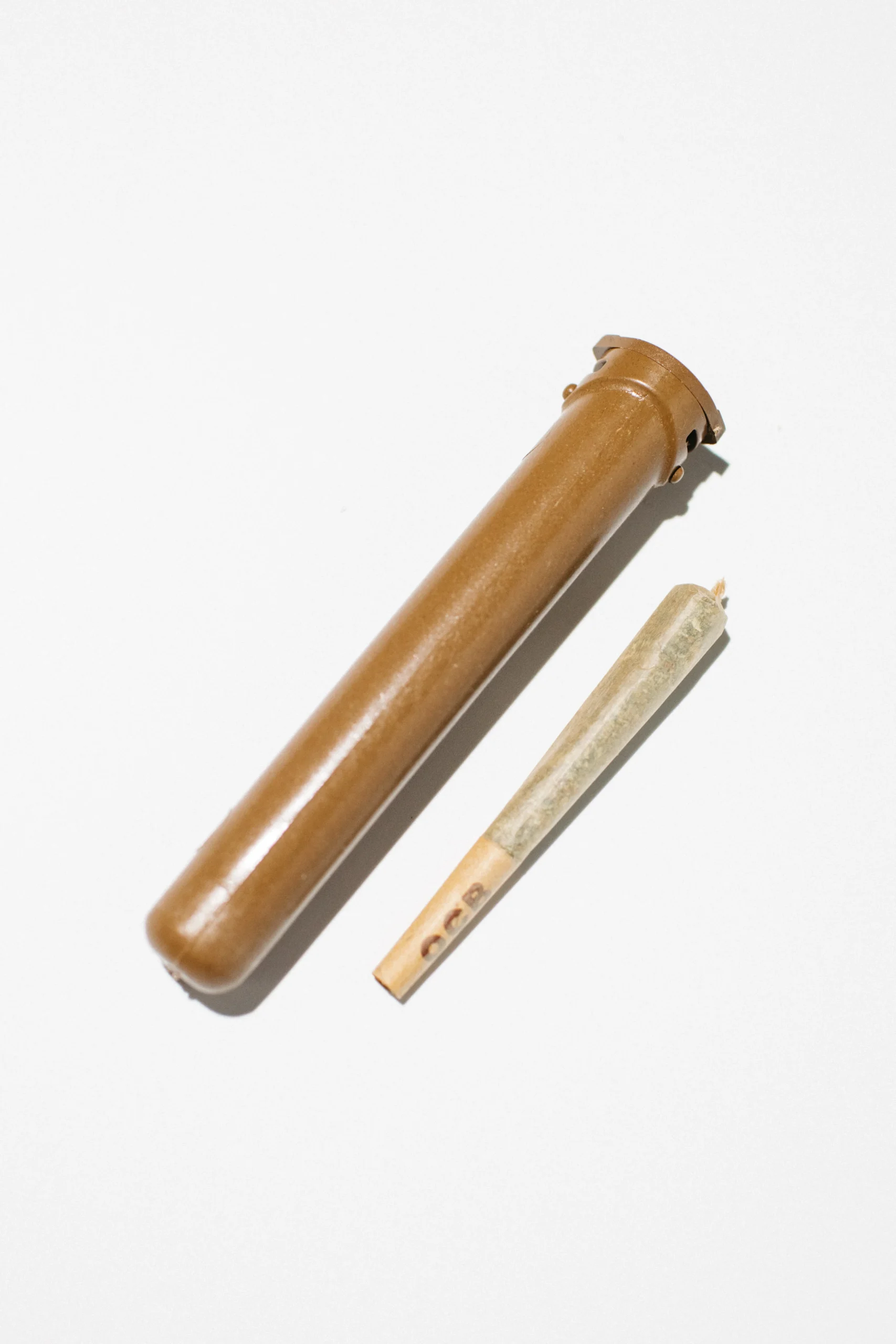
THCa, short for tetrahydrocannabinolic acid, is the compound raw hemp and cannabis plants actually produce, not Delta-9 THC. As the plant grows, it synthesizes THCa carrying an extra carboxyl group attached to the cannabinoid molecule. That extra group has to be removed by heat, a reaction called decarboxylation, before the compound converts into Delta-9 THC and becomes intoxicating. This is why raw THCa flower can test under the old 0.3 percent Delta-9 THC threshold on paper while still converting into a full-strength THC experience the moment it is smoked, vaped, or baked into food. It is also the exact mechanism regulators are now trying to close by measuring "total THC" instead of Delta-9 THC alone, covered in the legality section below.
Ounce of Hope grows its own hemp at its aquaponic farm in Memphis, and its THCa flower tests between 24.3 and 30.3 percent THCa depending on strain. That is the raw potential locked in the plant, not what you are consuming before you apply heat.
What Is Delta-8 THC?
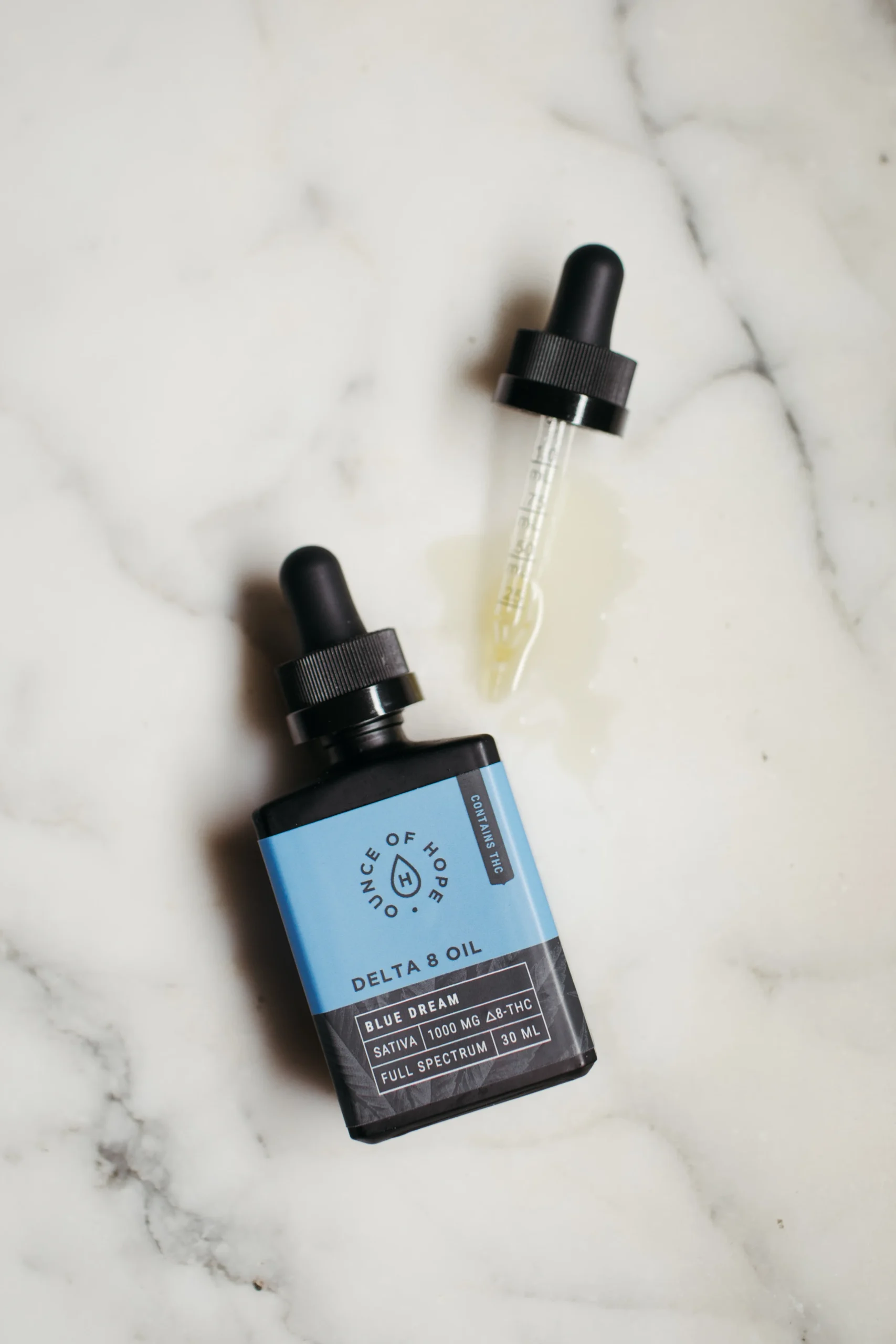
Delta-8 THC shares Delta-9 THC's exact molecular formula, but the double bond in its carbon ring sits on the eighth carbon instead of the ninth. That single-position shift changes how the molecule fits into the CB1 receptors in the body's endocannabinoid system, which is generally described as producing a milder effect than Delta-9 THC. Delta-8 occurs in raw hemp only in trace amounts, nowhere near enough to extract commercially, so almost every Delta-8 product on the market, including Ounce of Hope's vapes and gummies, is made by chemically converting hemp-derived CBD into Delta-8 through a process called isomerization. That conversion step, starting from a legal hemp compound and ending in a psychoactive one, is exactly why Delta-8 built its market after the 2018 Farm Bill, and it's also why regulators now classify it differently from cannabinoids the plant produces on its own, a distinction with real legal consequences, covered below.
Which One Is Stronger?
THCa on its own isn't stronger or weaker than anything, it isn't intoxicating at all until heat converts it. Once that conversion happens, THCa flower becomes full-strength Delta-9 THC, and Ounce of Hope's flower runs in the mid-20s to low-30s percent range depending on strain, among the higher end of what's commercially available. Delta-8, by contrast, is already active as sold. Because its altered bond position binds less tightly to CB1 receptors than Delta-9 THC, it's widely described as producing a gentler, less intense experience than an equivalent amount of Delta-9. If you're deciding between the two, Ounce of Hope's Delta-8 vs Delta-9 comparison and dosage guide are more precise starting points than a general strength comparison, since potency varies by batch and format.
Effects and Onset: How They Compare
How fast either cannabinoid takes effect depends on the format, not on whether it's THCa or Delta-8. Inhaled formats, smoked THCa flower or a vaporized Delta-8 product, reach the bloodstream through the lungs and are typically felt within minutes. Ingested formats, like Delta-8 gummies, are processed through digestion first, and effects generally take longer to appear, commonly in the 30 to 90 minute range, and last longer once they do. Because onset and duration shift by format as much as by cannabinoid, Ounce of Hope's own Delta-8 product pages and dosage guide are the more reliable reference for exact timing than a general figure here.
|
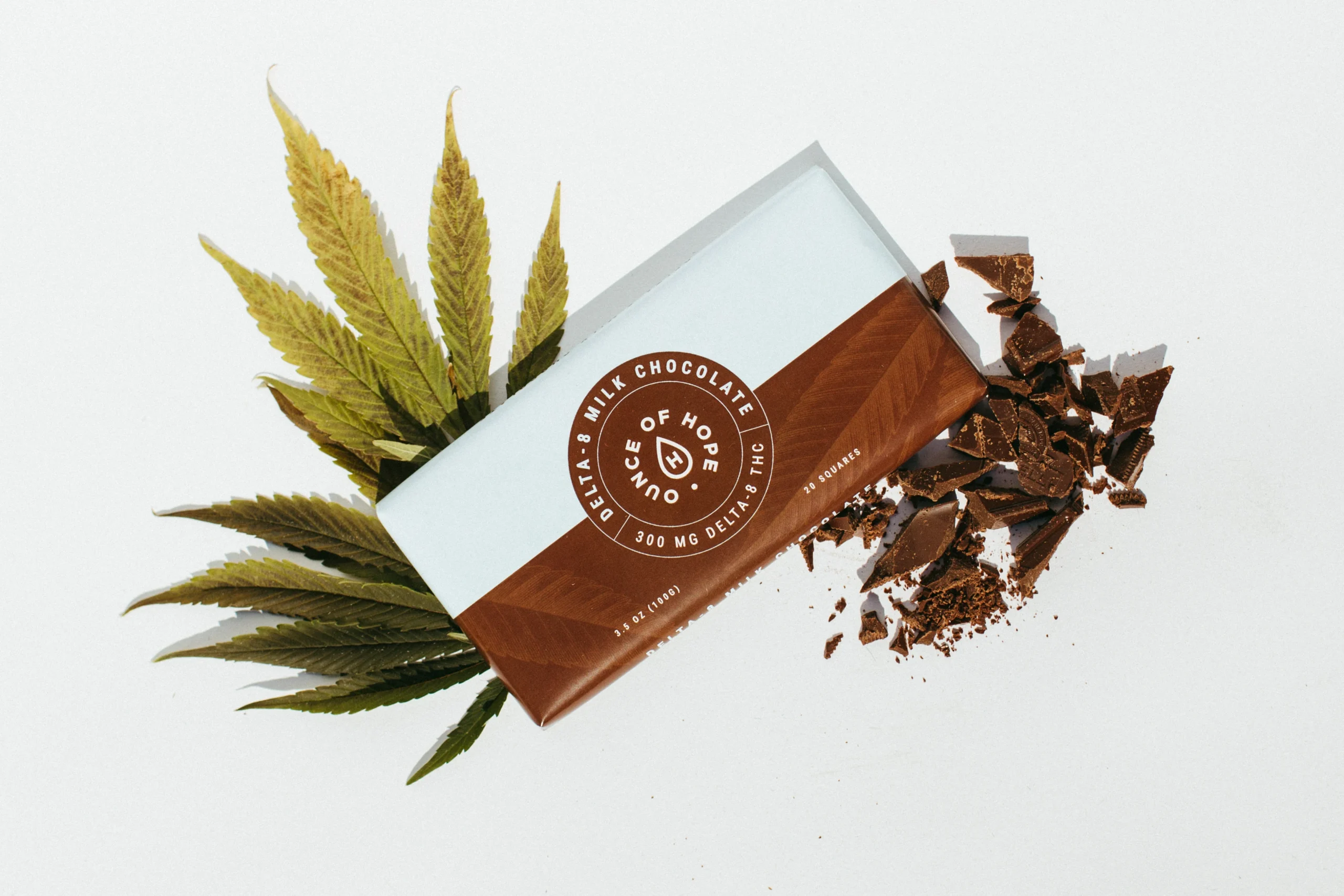
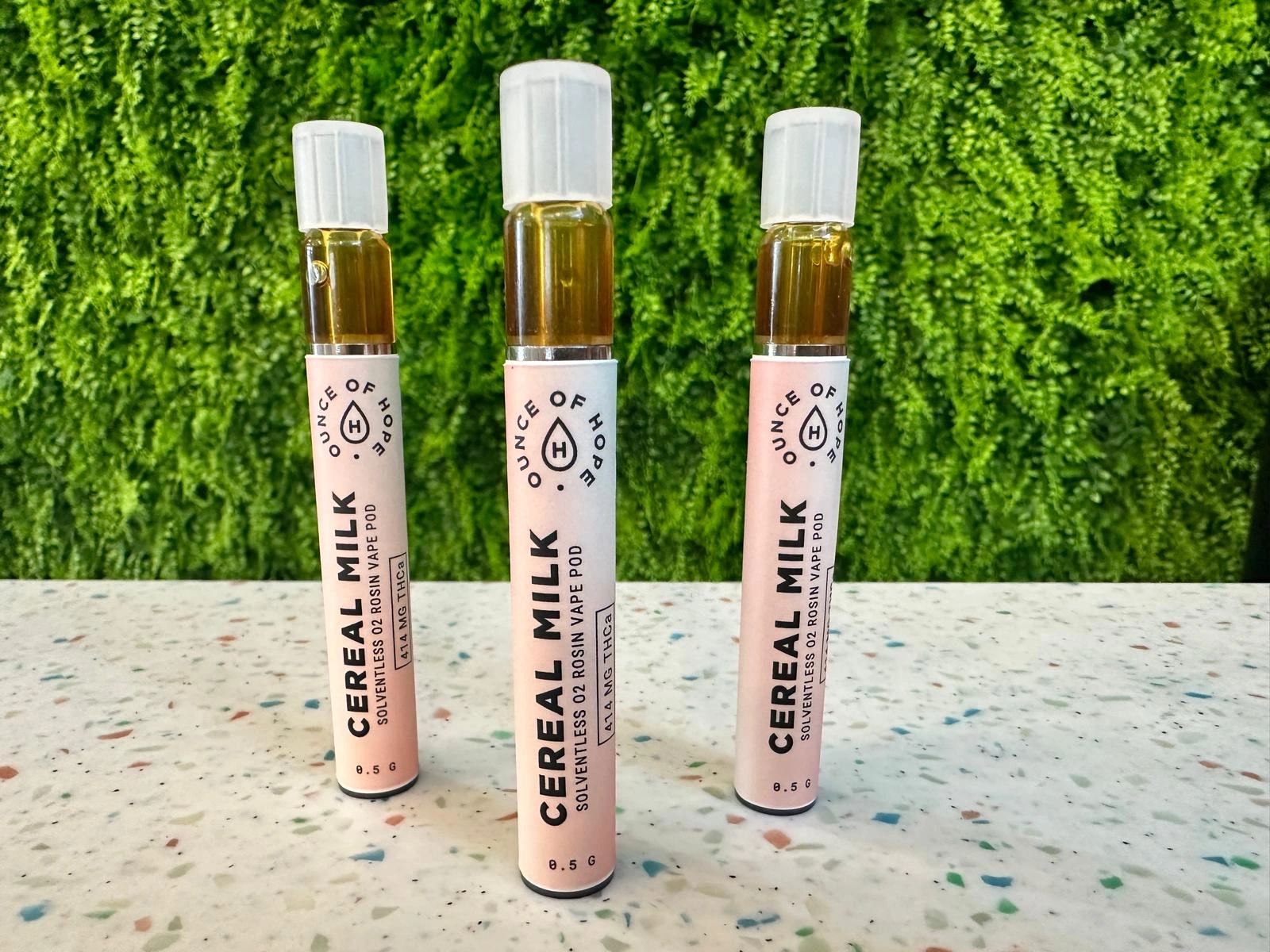
See the Difference in Person Lab-tested THCa flower and Delta-8 vapes and gummies, grown and formulated at Ounce of Hope's own Memphis farm. Must be 21 or older to purchase. |
Will Either Show Up on a Drug Test?
Yes, both can. Standard workplace and legal drug tests use an immunoassay that screens for a THC metabolite common to Delta-9 THC, Delta-8 THC, and decarboxylated THCa. The test doesn't distinguish which cannabinoid produced it or whether it came from hemp or marijuana. If you smoke or vape THCa flower, you've converted it into Delta-9 THC and it will register the same as any other THC product. Delta-8 carries the identical risk, regardless of its federal hemp status. If you're subject to any kind of drug screening, for work, sport, or a legal requirement, treat both cannabinoids the same way you'd treat any THC product, and don't assume "hemp-derived" means "test-safe."
Is THCa or Delta-8 Legal?
Cannabinoid law is changing fast at both the federal and Tennessee level, confirming current status before you buy or ship.
The 2018 Farm Bill legalized hemp at 0.3 percent Delta-9 THC or less by dry weight, but that definition measured Delta-9 THC alone and never accounted for THCa or Delta-8 content. That gap is the loophole both cannabinoids have operated under for years: a plant testing under 0.3 percent Delta-9 THC could still carry a large amount of THCa that converts to Delta-9 THC once heated, or be chemically converted into Delta-8 THC entirely outside that measurement.
P.L. 119-37, Section 781, closes that loophole by introducing a "total THC" measurement that folds in THCa and Delta-8 alongside Delta-9 THC, and by capping finished hemp products at 0.4 milligrams of total THC per container. That's a dramatically lower functional threshold than the old rule: at that cap, a single 5 milligram gummy would contain more than twelve times the legal limit, and a 10 milligram beverage would contain roughly twenty five times it. The law was originally set to take effect November 12, 2026, for all hemp-derived cannabinoid products.
That changed on September 2, 2026, when President Trump signed H.R. 6500, the Continuing Appropriations and Extensions Act, 2027, into law. Section 2019 of that bill pushed the compliance deadline back to December 11, 2026, but only for naturally occurring cannabinoids, meaning THCa and hemp-derived Delta-9 THC. Delta-8, classified as a converted cannabinoid, keeps the original November 12, 2026 date. In practice, Delta-8 products face the federal restriction a full month before THCa products do, a genuine structural difference in the two cannabinoids' legal timelines, not just a difference in chemistry.
The path to that delay wasn't smooth. The Senate passed the underlying funding bill 90 to 6 on August 8, 2026, after voting 61 to 32 earlier the same day to table a competing amendment from Senator Ted Budd that would have stripped the delay out entirely. The House concurred 370 to 48 on September 1, and the President signed it the next day. The White House has said this is the last extension it intends to support.
What Tennessee Changed
Tennessee moved first and moved harder than the federal government. HB 1376, enacted as Public Chapter 526 and signed May 21, 2025, shifted oversight of hemp-derived cannabinoids from the Tennessee Department of Agriculture to the state's Alcoholic Beverage Commission, effective January 1, 2026. Existing TDA-licensed inventory was allowed to sell through June 30, 2026. Since July 1, 2026, Tennessee caps total THC (Delta-9 THC plus THCa, calculated at a 0.877 conversion factor) at 0.3 percent for hemp-derived flower and products, a threshold most commercial THCa flower exceeds, including potency levels like the ones grown at Ounce of Hope.
Delta-8 faces a stricter standard than that cap. Because it's produced through chemical conversion rather than occurring naturally in the plant, Public Chapter 526 classifies Delta-8 as a synthetic cannabinoid and excludes it from Tennessee's legal hemp-derived cannabinoid product definition entirely. That's a full prohibition on retail sale, not a potency limit Delta-8 could stay under by reformulating. The same exclusion applies to other converted cannabinoids sold in the state, including Delta-10 and HHC.
How to Verify What You're Actually Buying
Whether it's THCa flower or a Delta-8 vape, the label on the shelf isn't proof of what's in the product, the Certificate of Analysis is. A current, trustworthy COA should show:
- The full cannabinoid potency panel, matched to the specific batch or lot number printed on your product, not a generic panel representing the product line as a whole.
- Contaminant screening beyond cannabinoids: pesticides, heavy metals, residual solvents (relevant for any product made through a conversion or extraction process, including Delta-8), and microbial testing.
- The testing lab's name and accreditation, so you can independently confirm it's a genuine third party, not an in-house or affiliated lab.
- A test date recent enough to reflect the batch you're actually holding, not a COA carried over from an earlier production run.
Every Ounce of Hope product, THCa or Delta-8, is verified by an independent, accredited third-party lab before it's released for sale, with current results published on the lab results page. How to read a COA and why it matters walks through what each section of a COA means in more detail. If a seller can't produce a batch-matched COA on request, for either cannabinoid, that's the clearest sign to walk away.
|
Shop THCa and Delta-8 at Ounce of Hope Every product across both lines is grown, converted, or formulated at Ounce of Hope's own aquaponic farm in Memphis and tested by an independent lab before it reaches a shelf. Must be 21 or older to purchase. Browse THCa Flower » Browse Delta-8 » Book a Farm Tour » Check the shipping policy for current state restrictions, they differ between THCa and Delta-8 and they're changing this year. |
THCa vs Delta-8 Questions, Answered
Is THCa the same thing as Delta-8 THC?
No. THCa is a non-intoxicating acid that occurs naturally in raw hemp and only becomes active Delta-9 THC after it's heated through smoking, vaping, or cooking. Delta-8 is a separate cannabinoid, structurally similar to Delta-9 THC but almost always made by chemically converting CBD, and it's already active when you buy it, no heat or conversion required on your end.
Will THCa flower show up on a drug test?
Yes, once it's smoked or vaporized. Heating THCa converts it into Delta-9 THC, and standard drug tests screen for a metabolite common to all forms of THC regardless of source. Raw, unheated THCa is not intoxicating, but almost no one buys THCa flower to eat it raw, it's sold and used specifically to be smoked or vaporized.
Is Delta-8 stronger than THCa?
The comparison doesn't really work that way. THCa itself isn't intoxicating until it's converted, at which point it becomes full-strength Delta-9 THC, generally the most potent of the three. Delta-8 binds less tightly to the same receptors and is widely described as milder than Delta-9, but potency varies enough by batch and format that a single multiplier isn't reliable, treat any specific ratio you see elsewhere with caution.
Is Delta-8 THC legal in Tennessee?
No. Public Chapter 526 classifies Delta-8 as a synthetic cannabinoid, since it's made by chemically converting CBD rather than occurring naturally in hemp, and excludes it from Tennessee's legal hemp product definition entirely. That's a full prohibition on retail sale in Tennessee, not a potency-based restriction, enforced under the Alcoholic Beverage Commission's framework since July 1, 2026.
Is THCa flower legal in Tennessee?
It's legal only below a strict potency threshold. Tennessee caps total THC, calculated as Delta-9 THC plus THCa content, at 0.3 percent for hemp-derived products as of July 1, 2026. Most commercial THCa flowers, including higher-potency strains, exceed that threshold once THCa is counted toward total THC, which is the entire point of the new measurement.
What's the federal deadline for THCa and Delta-8 in 2026?
They're different, which is unusual and worth knowing. THCa and hemp-derived Delta-9 THC have until December 11, 2026, under a delay signed into law on September 2, 2026. Delta-8, classified as a converted cannabinoid rather than a naturally occurring one, keeps the original November 12, 2026 deadline, a full month earlier.
How can I tell if a THCa or Delta-8 product is actually lab-tested?
Ask for a Certificate of Analysis matched to the specific batch or lot number on your product, not a general one representing the product line. It should show full cannabinoid potency, contaminant screening, and a named, accredited third-party lab, with a test date that matches your batch. How to read a COA and why it matters covers exactly what to look for section by section.
Can I buy both THCa and Delta-8 products from Ounce of Hope?
Yes, both are grown or formulated at Ounce of Hope's own Memphis facility and independently lab-tested before sale. Availability by state depends on current shipping restrictions, listed on the shipping policy page, since THCa and Delta-8 are restricted in different states and those lists aren't identical. Delta-8 currently excludes shipping to Tennessee addresses given the state's ban described above.