





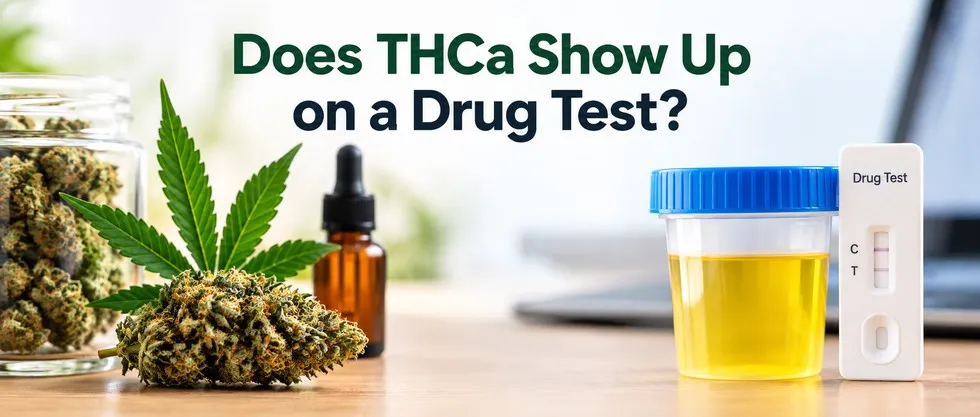
If you've been using THCa flower, vapes, or edibles and a drug test is coming up, you want a straight answer. Here it is: THCa itself usually isn't what a drug test is looking for, but that doesn't mean you're in the clear. In most real-world situations, THCa products can and do cause a positive result — because of what happens to THCa once it enters your body or gets heated.
The confusion around this topic makes sense. THCa is federally legal in many circumstances, sold openly online and in shops, and technically non-intoxicating in its raw form. It's easy to assume that "legal" means "won't show up on a test." But legality and detectability are two different questions, and mixing them up is where most of the confusion starts.
Let's walk through what's actually going on, so you can make an informed decision instead of a guess.
What Is THCa, Exactly?
THCa stands for tetrahydrocannabinolic acid. It's the raw, naturally occurring compound found in fresh cannabis and hemp plants before the plant is heated or aged. On its own, THCa is not psychoactive — it won't get you high sitting in its raw form.
What THCa becomes when you apply heat is a different story. Smoking, vaping, cooking, or otherwise heating THCa triggers a chemical reaction called decarboxylation, which strips away a carboxyl group and converts THCa into Delta-9 THC — the compound most people mean when they talk about "getting high" from cannabis. This is true whether the plant is labeled marijuana or hemp. The chemistry doesn't care about the label.
How THCa Differs From THC
The distinction matters because THCa and THC affect the body differently, at least at the starting point. THCa doesn't bind to your brain's cannabinoid receptors the way THC does, so it won't produce a high by itself. THC does bind to those receptors, which is why it's the compound tied to intoxication — and, as you'll see below, the compound tied to standard drug testing.
Why Standard Drug Tests Don't Look for THCa Directly
Most workplace and routine drug tests are not designed to detect THCa. Instead, they screen for a metabolite called THC-COOH (11-nor-9-carboxy-THC). This is what your liver produces after it breaks down THC. According to research published through the National Institutes of Health, THC-COOH — sometimes labeled THCA in older lab shorthand, which adds to the confusion — is the actual target analyte used in workplace urine testing, not the raw THCa compound found in unheated cannabis.
In other words, a standard test isn't checking "did this person touch THCa." It's checking "does this person's body show evidence that THC was processed." That distinction is the whole reason this topic trips people up.
So Why Can THCa Still Make You Fail a Drug Test?
This is where the risk comes in, and it comes down to two words: heat and metabolism.
Decarboxylation Turns THCa Into THC
When you smoke, vape, or cook THCa flower, you're applying heat directly to it. That heat converts a significant portion of the THCa into Delta-9 THC before it even enters your lungs or stomach. From that point forward, your body is processing THC, not THCa — regardless of what the product label says or how it was marketed before you used it.
Your Body Metabolizes That THC Like Any Other THC
Once THC is in your system, your liver gets to work on it the same way it would with THC from a licensed dispensary product. Enzymes break the THC down into intermediate metabolites and eventually into THC-COOH, which then circulates and shows up in urine, and to varying degrees in blood, saliva, or hair, depending on the test type. Your body has no way of knowing — or caring — whether the original source was a hemp-derived THCa product or traditional cannabis. The metabolic pathway is identical.
This is really the core answer to "does THCa show up on a drug test." It's not that THCa itself is being detected. It's that heated THCa becomes THC, and THC becomes the metabolite the test is actually built to find.
THCa Flower and Vapes vs. THCa Edibles and Gummies: Does the Product Type Matter?
Not all THCa products carry the same risk profile, and this is a detail a lot of general guides skip over.
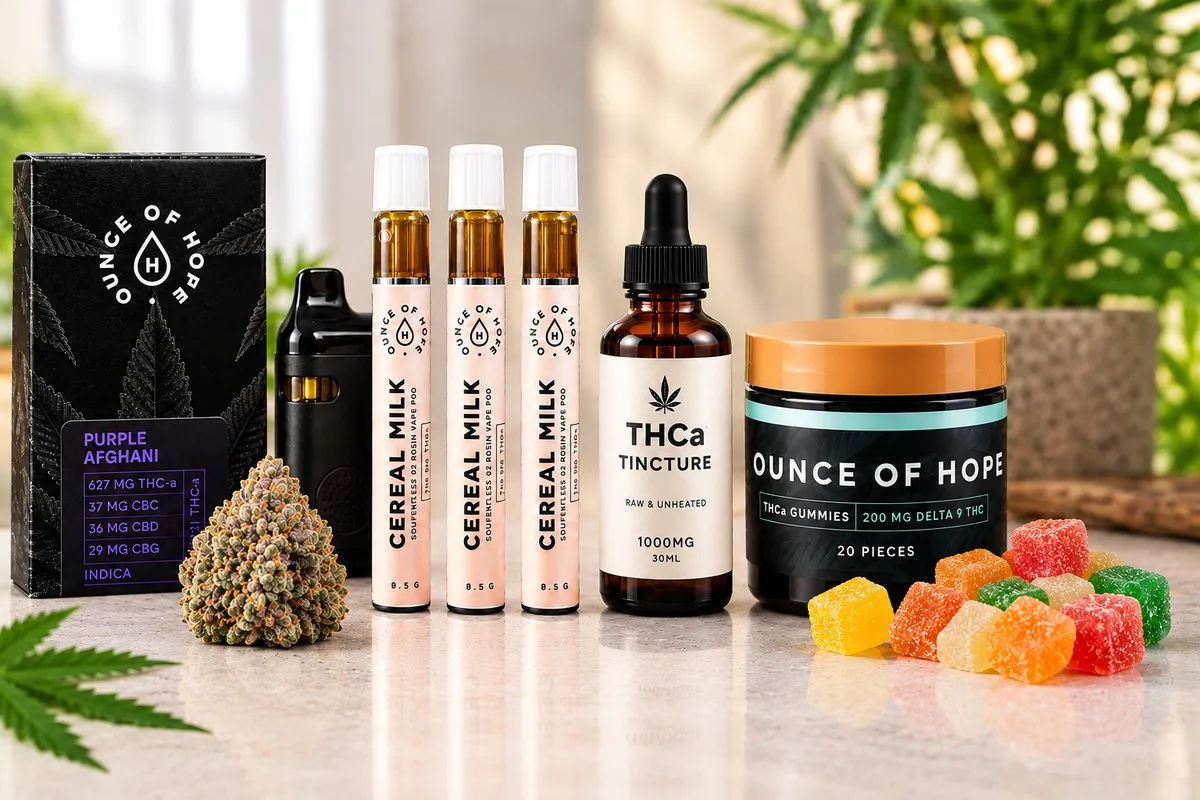
THCa flower and THCa vape products are consumed by applying direct heat — you're lighting, vaping, or dabbing the material, which drives decarboxylation right as you use it. That heat exposure is immediate and substantial, so a large share of the THCa converts to THC in that moment.
THCa edibles and THCa gummies work a little differently, but not in the way people assume. Most commercial THCa edibles are baked or manufactured using heat during production, which means the THCa has typically already been converted to THC before the product ever reaches you. Functionally, many THCa gummies and Delta-9 edibles on the market behave like standard THC edibles once they're in your hands, even if "THCa" appears somewhere on the packaging.
Raw, unheated THCa products — like certain THCa tinctures or juices that are never cooked or smoked — are a separate case. Because they skip the heating step, they involve much less conversion to THC. That said, "much less" isn't "none." Some conversion can still happen inside the body through digestive processes, even without external heat. If you're relying on a raw, non-heated product specifically to minimize THC exposure, understand that this reduces risk — it doesn't eliminate it.
The takeaway: how a THCa product is made and how you use it matters just as much as the fact that it's labeled "THCa."
Can THCa Make You Feel High?
Raw THCa, again, is not intoxicating on its own. But most people aren't consuming THCa in a truly raw state — they're smoking flower, hitting a vape, or eating something that's already been through a heating process. In those cases, what you're actually feeling is the effect of the THC that the THCa converted into. If a THCa product is giving you a noticeable high, that's a good sign meaningful decarboxylation has already taken place, which also means there's meaningful THC in your system for testing purposes.
Factors That Affect Whether You'll Test Positive
There's no single rule that applies to everyone here, and anyone who gives you a flat guarantee — "you'll be clean in exactly five days" — isn't being accurate. Several factors influence what shows up and for how long:
How much and how often you use plays a large role. Occasional, lighter use generally clears differently than frequent or heavy use, though "differently" doesn't mean "predictably" for any one person.
The potency of the product matters too. A THCa flower product with a higher THCa percentage produces more THC upon decarboxylation than a lower-potency one, all else being equal.
Individual body chemistry is a major variable. Body fat percentage matters because THC-COOH is fat-soluble and tends to be stored in fatty tissue, then released gradually. Metabolism, hydration, overall health, and even genetics can all shift how quickly someone's body clears these metabolites.
The type of test being used changes the picture as well — urine, blood, saliva, and hair tests all have different detection windows and sensitivities, and they're not interchangeable.
Because of all this variability, the honest answer to "how long will it take to clear my system" is: it depends on you, not on a fixed timeline that applies to every person and every product.
Home Drug Test Kits vs. Lab-Based Employer Tests
It's worth knowing that not all drug tests are built the same way, and that can lead to confusing or even contradictory results.
Over-the-counter home test kits are typically immunoassay screens — quick, convenient, and reasonably reliable, but generally less sensitive than lab equipment. They're designed around a specific cutoff concentration, meaning they flag a result as positive only once THC-COOH crosses a certain threshold. If your levels are close to that line, a home test could come back negative while a more sensitive lab test would not, or vice versa depending on the specific kits and cutoffs involved.
Employer and lab-based testing often uses a two-step process: an initial immunoassay screen, followed by a more precise confirmation method like gas chromatography-mass spectrometry (GC-MS) if the screen is positive. This confirmation step is more accurate and harder to fool, and it's generally what's used in situations with legal or employment consequences.
The practical point here isn't that one test is "easier to pass." It's that a negative result on a home kit doesn't guarantee a negative result on a lab test, and you shouldn't treat a cheap test as the final word if the outcome actually matters to you.
Common Misconceptions About THCa and Drug Tests
A few myths keep circulating, and they're worth addressing directly.
"It's legal, so it won't show up on a test" is probably the biggest one. Legal status under the Farm Bill is based on how much Delta-9 THC a hemp plant contains before it's used, measured on a dry-weight basis. It has nothing to do with what happens chemically once you heat and consume that plant. A product can be perfectly legal to purchase and still result in enough THC-COOH in your system to trigger a positive test.
"Hemp-derived means it's different from marijuana in my body" is another one worth clearing up. Whether THC comes from a hemp-derived Delta 9 product, a THCa flower jar, or traditional cannabis, your liver processes it through the same pathway and produces the same metabolite. Drug tests can't distinguish the source.
Some people also confuse THCa with CBD, assuming both are "non-intoxicating" and therefore equally unlikely to affect a test. CBD and THCa are chemically distinct compounds. THCa converts to an intoxicating substance under heat; CBD does not follow that same conversion pathway toward Delta-9 THC.
What This Means If You're Facing a Drug Test
If you have a drug test coming up — for work, a legal requirement, or any other reason — the safest assumption is that THCa products, especially flower, vapes, and most edibles or gummies, carry real risk of a positive result. Raw, unheated THCa carries comparatively lower risk, but not zero risk, and it's not something to rely on if the outcome genuinely matters to you.
If you're uncertain about your own situation, it's reasonable to ask your employer or testing administrator directly what their policy covers, since some organizations treat any THC metabolite the same way regardless of source. And if you're exploring hemp-derived options generally, it helps to understand the difference between THCa products and products that are already lab-verified for their Delta-9 THC content, since that distinction affects both legality and what you can expect once it's in your system.
None of this is meant to scare you away from THCa products — plenty of people use them without any testing concerns at all. It's simply about going in with accurate information instead of assumptions, so you're not caught off guard.
Frequently Asked Questions
Does THCa flower show up on a drug test the same way as regular cannabis?
Yes. Once THCa flower is smoked or vaped, the heat converts it to Delta-9 THC, and your body processes that THC the same way it would from any cannabis source, producing the same THC-COOH metabolite that standard tests detect.
Are THCa gummies and edibles safer for drug testing than flower?
Not necessarily. Most commercial THCa edibles and gummies are made using heat during production, which typically means the THCa has already converted to THC by the time you consume it — putting them closer in risk profile to THCa flower or vape products than to a truly raw, unheated product.
Is hemp-derived Delta 9 treated differently than THCa on a drug test?
No. Both ultimately produce Delta-9 THC in the body, which gets metabolized into THC-COOH. Standard drug tests cannot tell the difference between THC that originated from a hemp-derived Delta 9 product, a THCa product, or traditional marijuana.