




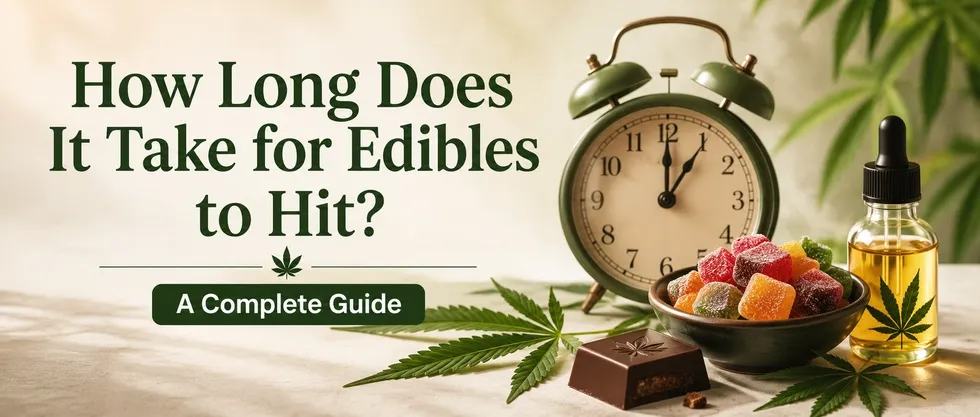
You ate an edible. You checked the clock. Now you're checking it again, and honestly, nothing feels different.
If that's you right now, take a breath. This happens constantly, even to people who've used edibles for years. Edibles just don't work like smoking or vaping, where you feel something within a couple of minutes. They run on their own clock, and that clock changes depending on who you are, what you ate, and what kind of edible it was.
So let's actually get into why. What's happening inside your body between the moment you swallow an edible and the moment you feel it? What speeds that process up or slows it down? And what should you actually do while you're sitting there waiting? That's what this guide is for.
The Short Answer — and Why It's Only a Starting Point
Most people start feeling an edible somewhere between 30 minutes and two hours after eating it. That's a big range, and it's big on purpose — not because nobody knows the answer, but because the honest answer really does depend on the person and the product.
Some people feel something in 20 minutes. Others eat the exact same dose and don't notice a thing until well past the two-hour mark, especially if they had a big meal beforehand or just digest things slowly in general. Neither of those is unusual. Neither means anything went wrong.
Treat that window as a rough starting line, not a guarantee. The rest of this guide is really just an explanation of what pushes you toward the fast end, the slow end, or somewhere in between.
What's Actually Happening in Your Body When You Eat an Edible
When you eat a gummy or a piece of infused chocolate, it doesn't go straight into your bloodstream. It goes into your stomach first, then your intestines, where it slowly gets absorbed over time. Compare that to inhaling, where cannabinoids hit your bloodstream almost instantly through your lungs. Digestion is just a longer road to travel.
But that's not even the whole reason. Before an edible's THC reaches the rest of your body, it has to pass through your liver. This step gets called "first-pass metabolism," and it's actually the bigger reason edibles feel different from smoking, not just slower.
Your liver doesn't leave THC alone. It converts a chunk of it into a different compound on the way through. That converted version doesn't behave the same way in your body — people generally describe it as heavier, more body-focused, and longer-lasting than what you'd feel from a vape or a joint, even at a similar dose. Same starting ingredient, different experience, because of that one detour through your liver.
Once you understand that detour, basically everything else about edibles starts making sense: why they're slow, why they're unpredictable, and why they can sneak up on you harder than expected once they finally show up.
The #1 Mistake: Why "I Don't Feel Anything Yet" Leads People to Take More
This is where most edible experiences go sideways, so it gets its own section instead of a footnote.
The pattern goes like this: someone eats an edible, waits maybe 45 minutes to an hour, feels absolutely nothing, and decides it must not have worked. So they eat more. Then, later, both doses start absorbing and converting at the same time, and suddenly the effects land a lot harder than anyone planned for.
The first edible didn't fail. The real issue is that "I don't feel it yet" and "this isn't working" get treated as the same thing, and in the moment, they genuinely feel identical. But digestion and liver conversion don't speed up just because you're tired of waiting. Your body is often still quietly processing that first dose in the background, even while you're convinced nothing's happening.
If there's one thing worth remembering from this entire article, it's this: taking a second dose too early, before the first one has caught up, is the single most common way people end up far more affected than they meant to be.
What Actually Changes Your Onset Time (Person to Person)
Since everyone digests and metabolizes things a little differently, the same edible can hit two people at two very different speeds. A handful of factors tend to matter most:
- Body composition. Body size and fat percentage can affect how cannabinoids get absorbed and distributed, which shifts when you notice anything.
- Metabolism. Faster digestion tends to move things along quicker. Slower digestion stretches the wait out.
- Tolerance. Someone who uses edibles regularly may notice effects differently than a first-timer, simply because their body has adjusted over time.
- What's in your stomach. An empty stomach usually speeds absorption up. A big, fatty meal beforehand tends to slow it down and delay everything.
None of these act alone. They all feed into that same digestion-and-liver process from earlier. That's the real reason the same product can hit you fast on one day and slow on another — it's not the product being inconsistent, it's your body doing its own thing depending on the day.
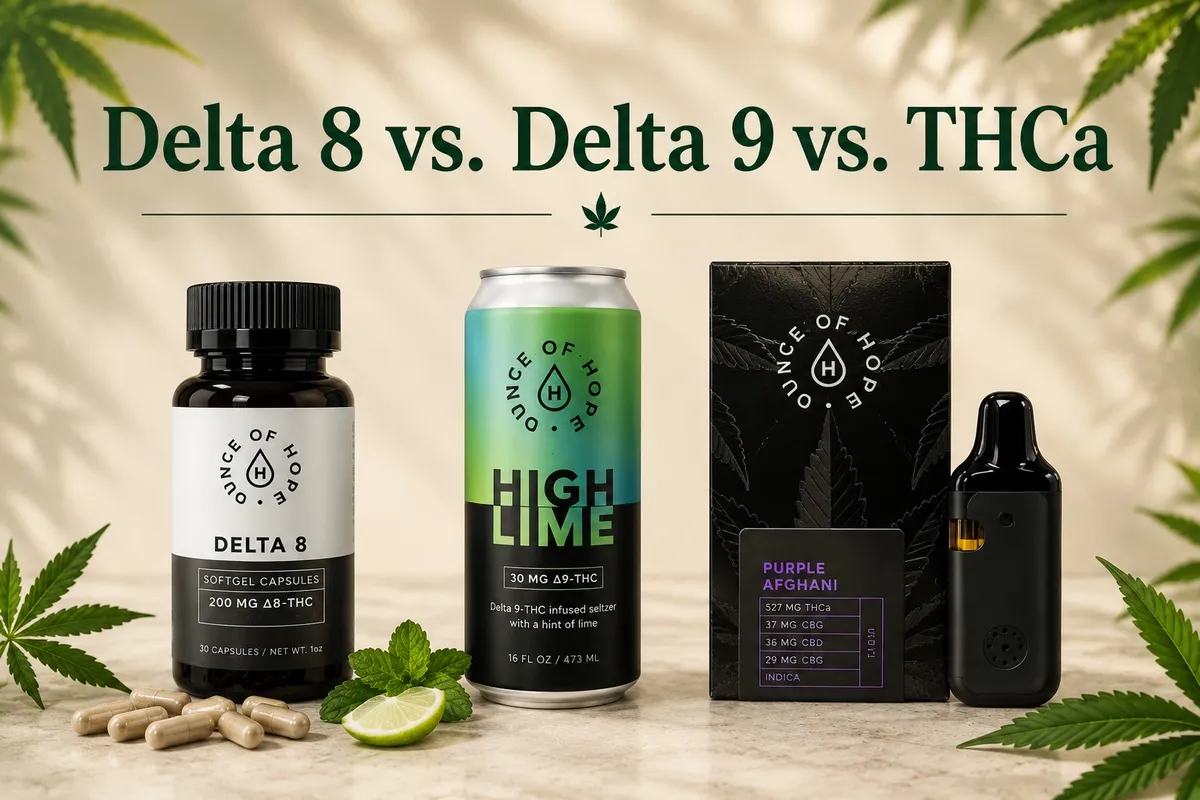
Delta 8, Delta 9, and THCa: Does Onset Time Differ by Cannabinoid?
If you've tried edibles made with different cannabinoids, it's fair to wonder whether the cannabinoid itself changes how fast things kick in.
Honestly, the underlying process — digesting, absorbing, passing through the liver — works roughly the same way no matter which cannabinoid is involved. What can differ is how a particular cannabinoid feels once it's active, and how a given product is formulated, and those two things affect how noticeable the onset feels more than the cannabinoid label does on its own.
So instead of assuming Delta 8 is automatically slower than Delta 9, or that THCa behaves some special way, it's more useful to judge each product on its own. Formulation, dose, and the personal factors above still matter more than which cannabinoid is printed on the label. If you're trying something new, start low and pay attention to your own response — that'll tell you more than any general rule.
Does the Type of Edible Matter? (Gummies vs. Chocolates vs. Drinks vs. Capsules)
The format you choose plays a role too, mostly because of how much work your body has to do to break it down first.
Solid edibles — gummies, chocolates, capsules — generally need to be digested before their cannabinoids get released and absorbed, which is part of why they tend to sit toward the slower end of things. Drinks are a bit different. Since they're already liquid, some of what's in them can start absorbing sooner, which is why beverages sometimes get reported as feeling a little quicker than solid edibles. That's not a hard rule, though — it still varies by product and person.
None of this makes one format "better" than another across the board. It just means your format choice can nudge you toward the faster or slower side of the onset window, on top of everything else already covered here. If you're comparing gummies against a drink, it's worth keeping that in mind rather than assuming they'll behave identically just because the THC amount looks the same on paper.
Onset vs. Peak vs. Duration — Why These Aren't the Same Thing
It's tempting to think of the whole edible experience as one blurry stretch of time, but really there are three separate things going on, and mixing them up is a big part of why this whole topic feels so confusing.
Onset is just the first moment you notice anything — a shift in mood, a little something in your body, whatever tips you off that it's started. Peak comes later, once absorption and liver conversion have had more time to build, and it's when effects are at their strongest. Duration is the whole ride, start to finish — from that first noticeable moment all the way until it's fully worn off, and this stretch is usually longer than people expect, especially compared to inhaling.
So someone might notice onset around the one-hour mark, hit their peak sometime after that, and still feel traces of it hours later. If you're only judging "how long edibles take" by that first onset moment, you're missing most of the actual experience — and that gap is exactly why people underestimate how long they should wait before assuming an edible didn't work, or has worn off.
How to Dose and Wait Responsibly
Given everything above, patience really does most of the heavy lifting here.
Start low, especially with a new product or an unfamiliar cannabinoid. That gives you room to learn how your own body reacts before you go any further. And once you've taken that first dose, wait it out — give it a real, defined stretch of time, long enough to account for slow digestion or a full stomach, instead of watching the clock and getting anxious the second nothing seems to be happening.
If a solid amount of time has genuinely passed and you feel nothing at all, it's fair to think your dose may not have been enough for you. Just make that call calmly, with everything you now know about how this process works — not out of impatience in the first hour. Looking over general dosing guidance before you even start, and picking an amount that matches your experience level, is one of the easiest ways to sidestep the mistake covered earlier in this guide.
Whatever you're taking, the wait itself isn't a red flag. It's just part of how edibles work. Treating it that way is really the difference between a good experience and an uncomfortable surprise.